The New Digital Garage: Why Drivers and Fleet Operators Expect Smarter Vehicle Tools in 2026
Until recently, vehicle ownership was strictly an analog experience. Managing a personal vehicle or a small business fleet meant relying on paper records crammed into the glovebox or a filing cabinet. You would write down odometer readings on a sticky note to remember your next oil change.
When the dreaded Check Engine light came on, you felt immediate anxiety because who knows what it means until you take your car to a professional. And when a family member or a company driver left with the vehicle, you simply had to hope they arrived safely and on time. Mobile phones alleviated this lack of visibility somewhat, but often you had no idea where they were until they called you from their destination.
This analog approach to vehicle ownership and fleet management sounds very outdated today. And why wouldn't it? Smart devices, sensors, and the Internet of Things (IoT) now offer persistent visibility and contextual data about nearly everything in our lives. The concept of the digital garage was bound to take hold, and in 2026 it has become the new standard for vehicle ownership and fleet management.
Everyone, from parents handing the keys to a newly licensed teenager to car-sharing hosts and fleet managers overseeing company vehicles, expects a lot more from vehicle ownership today. The digital garage is the answer to those expectations, and this article explains how it works, who it serves, and why 2026 is the turning point.
What Is a Digital Garage?
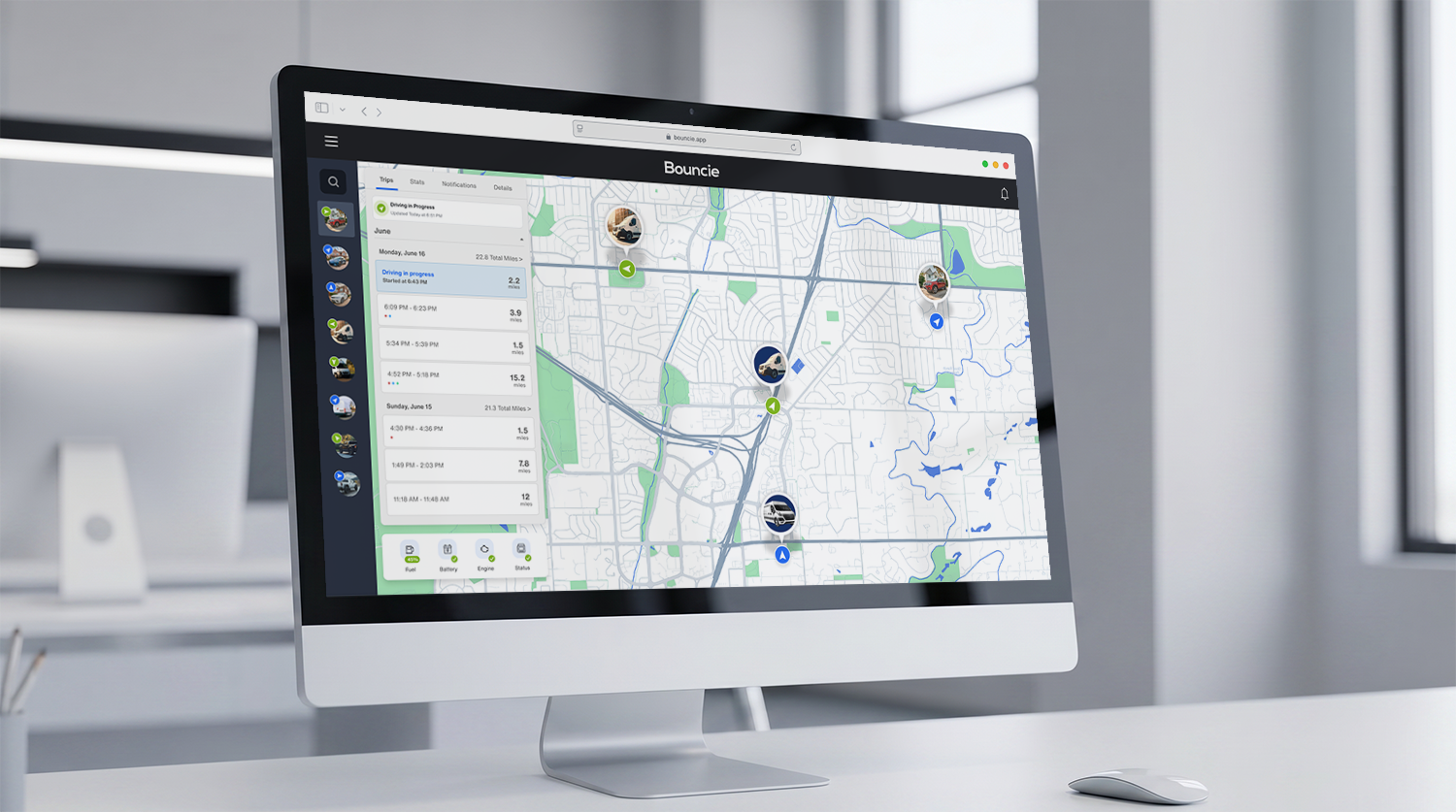
A digital garage is a hardware and software ecosystem that allows vehicle owners, fleet operators, and families to monitor, maintain, and manage all their automotive assets through a single unified interface. Much like a smart home hub centralizes your thermostat, security cameras, and lighting, the digital garage centralizes vehicle management functions.
At the heart of the digital garage ecosystem is a GPS vehicle tracking device. This small, unobtrusive piece of hardware provides real-time location monitoring. You can also use this data to generate automated reports, such as mileage logs or trip histories, based on records of driven routes.
Some trackers can even monitor driving behavior. This feature typically includes alerts for instances of speeding, rapid acceleration, and hard braking. These notifications are useful to concerned parents and fleet managers alike.
The digital garage can also monitor a vehicle’s mechanical health. It can send alerts for diagnostic trouble codes (DTCs), changes in battery voltage, and fuel consumption. Vehicle health data allows you to throw away the sticky notes and implement preventive maintenance based on actual data coming straight from the car’s computer systems.
The digital garage is also extremely versatile. For a single-car household, it acts as a digital mechanic and a family safety net. For a commercial operation, it functions as a highly scalable command center that leverages automotive IoT to keep multiple field assets running profitably.
How Driver and Fleet Expectations Are Reshaping the Digital Garage
Now that you know what the digital garage is, you may wonder why the concept has really taken off in the past couple of years. For the answer to that, you only need to look at how car owner and driver expectations have changed. And those expectations have evolved because of the on-demand, hyper-connected world we live in.
Today, consumers can track a $20 pizza delivery step by step from the oven to their front door. When they’re expecting a package, they can track the delivery driver’s progress in real time. The same logic applies to the rise of IoT and smart homes. When your thermostat can track temperature and humidity over the last 30 days and present that data in a way that helps you reduce your utility bill, all from a mobile app, it is only natural that drivers and fleet operators would expect the same from one of their most valuable assets.
Drivers and fleet operators now expect real-time tracking, proactive safety alerts, and engine diagnostics to be available in a single, useful app. However, a significant shift has occurred in the sources of this connectivity. On some level, automotive manufacturers have tried to meet this demand. Yet, consumers aren’t always happy with what the OEMs deliver.
The Problem With Factory-Installed Apps
Factory-installed apps are regularly criticized for being clunky and slow to update. Too often, their usefulness declines after an initial free trial period, requiring the family or business to pay expensive subscription fees for the features they really want. And in almost all cases, OEM apps create isolated data silos. If there is a Ford, a Toyota, and a Chevrolet in your garage, you can expect to juggle three different apps with varying levels of quality and no interoperability.
Third-party car owner apps offer a vendor-neutral solution. With their universally compatible interfaces, these smart platforms allow users to monitor vehicles of all types on a single unified dashboard. And car owners often find their apps more user-friendly and feature-rich. OEMs tend to lock users into their own platforms, while third-party solutions focus on delivering the experience customers actually want.
The Smart Tools That Power a Digital Garage
To understand where OEM tools fall short, it helps to define what a fully functional digital garage actually requires. The following are the smart tools that make up the digital garage experience and the specific outcomes each one delivers.
Insight Into Vehicle Usage
Businesses want to monitor the routes their drivers take for efficiency. They want to track fuel consumption. Truly smart tools log every mile of every trip, calculating trip distances and duration. Having this data collected automatically makes tax compliance and expense reimbursements effortless.
Families benefit from insights into vehicle usage, too. Parents can be confident that their teenager has arrived at their destination and that they’re driving safely there and back. Behavior-monitoring alerts can let parents know when their child exceeds the speed limit, hits the brakes too hard, or engages in other unsafe habits.
Maintenance Alerts
A check engine warning should not be a mystery in 2026, but for most drivers it still is. OEM tools frequently fail to translate diagnostic trouble codes into actionable information. Smart digital garage platforms solve this directly by reading the vehicle's onboard computer and presenting the engine code in plain language on your smartphone, so you know what is wrong before you ever call a mechanic.
Instead of relying purely on a mechanic's assessment, today’s vehicle owner wants to walk into the repair shop already knowing that the issue is a faulty oxygen sensor rather than a failing catalytic converter. In addition to providing this information, smart tools track exact mileage to support proactive scheduling for oil changes, tire rotations, and brake inspections.
Security
The internal sensors on today's cars can determine whether a vehicle has been in a collision, but that information often stays buried in the vehicle's onboard system with no automatic alert sent to the owner. Smart tools will automatically send text alerts to designated emergency contacts when events like this happen.
Other necessary security features include live location tracking, which ensures that if an asset is ever stolen, law enforcement can pinpoint its exact position. In this way, real-time location monitoring provides an incomparable safety net for both families and businesses.
How Fleets and Families Put the Digital Garage to Work
With the right digital garage tools in place, the practical applications differ significantly between business and personal use. Here is how each audience group puts those tools to work.
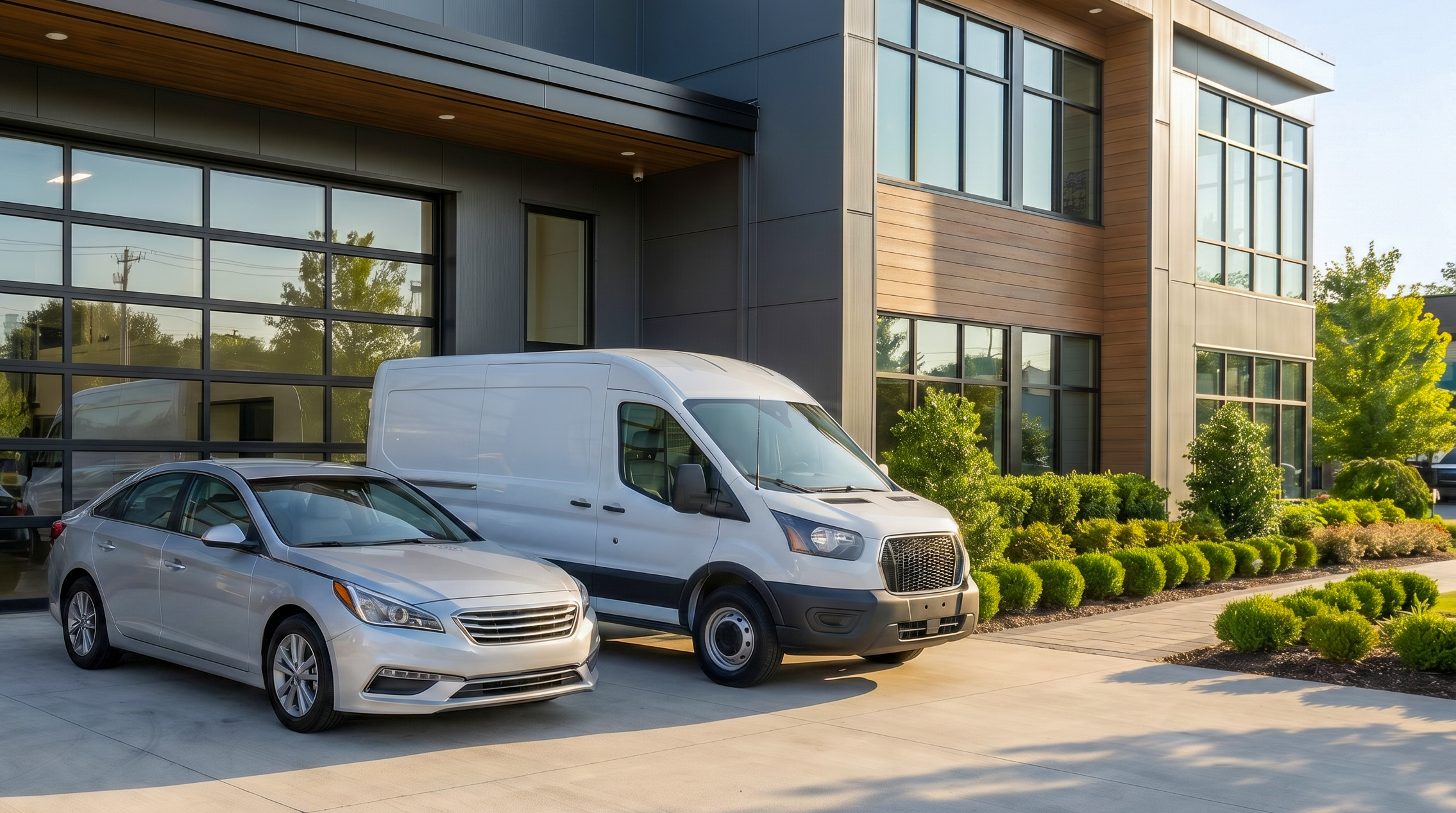
Small and mid-sized fleets (plumbers, landscapers, and HVAC technicians) tend to use these tools to streamline their operations and reduce overhead. With a digital garage, dispatchers can see exactly which van is closest to a new emergency job site, verify that drivers are sticking to approved routes, and ensure that field technicians arrive at customer locations on time.
Customers today expect precise ETAs, and dispatchers can oblige with their smart tools. Using GPS accuracy, they can tell a homeowner exactly when the technician will pull into their driveway. This elevates the customer experience to enterprise levels.
Meanwhile, families turn to the digital garage primarily to ensure safety and gain peace of mind. For example, parents of teenage drivers use custom speed alerts and Geo-Zones (virtual perimeters) to monitor their kids without constantly texting or calling them, which would create a distraction. Similarly, adult children use the app to keep a supportive, watchful eye on elderly parents who may still be driving, ensuring they are returning home safely.
Why Bouncie Is the Hub of the New Digital Garage
The digital garage is no longer a concept on the horizon. It is the standard for anyone managing a vehicle with any degree of seriousness, whether at home or in a business setting. The remaining decision is which platform delivers the right combination of features, flexibility, and affordability. For families, business owners, and fleet managers, that platform is Bouncie.
Bouncie is a small GPS tracking device that simply plugs into any vehicle’s OBD-II port. Since there’s no hardwiring, you don’t need an automotive electrician to install it. There's no complicated setup, so the vehicle is live and transmitting data within minutes. Bouncie delivers a comprehensive set of features through its mobile app. This includes mechanical diagnostics, detailed trip summaries with exact route mapping, and comprehensive monitoring of driving behavior.
Unlike OEM tools, Bouncie doesn’t trap your data in a closed ecosystem. The fully open Bouncie API allows for seamless integration. Bouncie is also a highly scalable ecosystem for both home and business use. Whether you want to integrate vehicle location into your company’s custom dispatch software or connect your car’s arrival to your smart home lighting system, Bouncie makes it possible. It is the definitive tool for bringing any vehicle into the future.
Digital Garage FAQs
The following questions address what families, fleet operators, and connected car consumers most commonly ask about the digital garage and how connected car tools like Bouncie compare to factory-installed alternatives.
How does a digital garage differ from standard GPS tracking?
Standard GPS tracking is focused on a single piece of data, which is the vehicle's physical location on a map. Meanwhile, a digital garage is an entire ecosystem built on a foundation of GPS tracking. Beyond real-time location data, you also get vehicle diagnostic data (such as battery health and engine codes), driver behavior analytics (such as hard braking and rapid acceleration), automated trip logging, and maintenance scheduling. More importantly, all these benefits are offered in a single, unified platform.
Can I use one app to monitor multiple vehicles?
Yes, you can. One of the greatest advantages of a third-party platform like Bouncie is the ability to monitor an entire household or a commercial fleet from a single login. You can view all your vehicles on a single map simultaneously, regardless of make, model, or year.
Do I need a new car to get connected features?
No, you don’t. In fact, any vehicle manufactured for sale in the United States after 1996 has the OBD-II port required to use Bouncie. By plugging a smart device like Bouncie into this port, you can instantly add modern connected car tools to older vehicles, bringing them right into the digital age without buying a new car.
Is the data private and secure?
Reputable connected car and smart tool providers use robust data encryption to keep your data safe. Bouncie uses advanced security protocols to ensure that all data transmitted from the vehicle to cloud servers and, subsequently, to your mobile app is strictly protected, fully private, and never sold to third parties.
What’s the difference between OEM and aftermarket tools like Bouncie?
OEM tools are built into the car at the factory and typically restrict you to their specific brand app, which can be expensive to maintain and often has a clunky interface. Aftermarket tools like Bouncie are brand-agnostic, incredibly affordable, update their software constantly, and allow you to manage a diverse fleet of different vehicles all under one roof.
The Digital Garage Is Getting Smarter and More Necessary
Drivers, families, and businesses today demand the smart tools that deliver real-time visibility and proactive management in the digital garage. And why wouldn’t they? The rest of the world has entered the digital realm, so it’s no surprise the garage is getting smarter too.
The results speak for themselves. Shifting from analog to digital car management can reduce thousands of dollars in fuel waste. Smart tools can help prevent costly engine failures through early diagnostic alerts. Families can have the peace of mind that a loved one has safely arrived at their destination. The benefits are undeniable. To start making your garage smarter, learn more about Bouncie today.