GPS Tracking for Landscaping: Managing Seasonal Crews More Efficiently
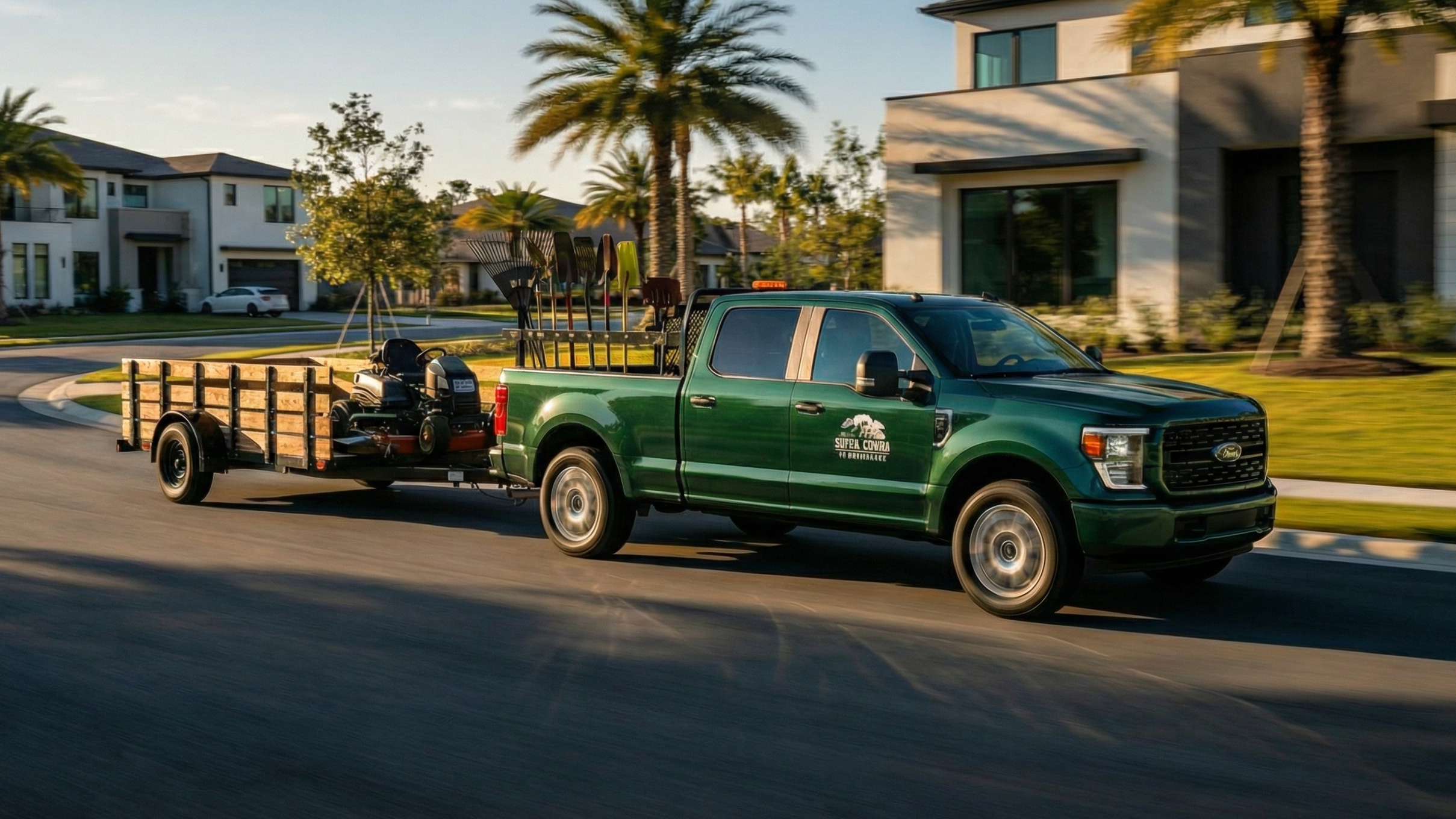
GPS tracking for landscaping businesses gives owners real-time visibility over seasonal crews, vehicles, and job site activity from a single dashboard. For many, spring marks the rapid return of full-scale operations. It’s a season of renewal as color returns to the landscape and business ramps up quickly. But for landscaping business owners, there’s little time to stop and smell the growing roses. Operations shift almost overnight from maintenance mode to full capacity. You de-winterize equipment, hire new staff, and deploy fleets to job sites demanding immediate attention.
If this sounds familiar, it is because managing a seasonal workforce introduces operational challenges that year-round fleet operators rarely face. You may be managing temporary employees alongside rented or reactivated vehicles. Meanwhile, your clients have little patience for your struggles and demand service ASAP.
GPS tracking for landscaping offers a way to bring structure and visibility back to seasonal operations quickly. At first glance, GPS tracking for landscaping businesses may not seem like a comprehensive solution. The value becomes clear when GPS tracking is viewed as an operational management tool that delivers real-time data, not just vehicle locations. It runs on the same fleet GPS tracking that fleets in other industries rely on, applied to the realities of seasonal landscaping crews. The sections below explain why it has become a practical foundation for managing them.
Operational Challenges Facing Seasonal Landscaping Crews
Landscaping businesses face many of the same logistical hurdles as other field service operations, but seasonality makes those challenges more complex. Seasonal demand can cause your business to look very different in spring than it does in December. The resulting reliance on seasonal labor creates pain points that can quickly erode profit margins if you don’t have a plan in place.
Below are four common operational challenges that GPS tracking for landscaping is designed to address:
Temporary Staffing and Maintaining Oversight
Whether it’s because business more or less stops in the winter months, or you need to scale up early in the spring, temporary workers are a part of the landscaping business. While many temporary workers can get right to work and perform commendably, there are disadvantages to this hiring model.
First and foremost, you don’t often get the time to train and establish trust with transient labor. You are put in the uncomfortable position of handing over the keys to expensive trucks and equipment to drivers you may have met a week ago. So now the questions start. Are crews heading directly to the site? Are they taking extended breaks?
In many cases, oversight depends on trust rather than verifiable operational data. This lack of oversight with temporary staff can lead to inefficiencies that compound daily. A 15-minute delay by one crew might seem minor, but across ten crews over a six-month season, that lost time translates into thousands of dollars in wasted wages.
Dispersed Assets and Equipment
In the landscaping business, employees aren’t confined to an office or factory floor. Instead, they take valuable assets like trucks, trailers, and mowers all around your city. Without digital tools, it can be difficult to track which crew has which truck and where each vehicle is located.
The nature of the job often requires parking vehicles in public areas or on the side of roads for extended periods, increasing the risk of theft or unauthorized use. When vehicles and equipment are spread across multiple job sites, manual check-ins like phone calls or text messages are inefficient and distracting for crews.
Inconsistent Time Tracking
For many landscaping companies, billing is tied directly to time on site. If your crews manually log their hours or record arrival and departure times, errors are inevitable. Inaccurate time tracking can lead to under billing clients and losing revenue, or to overbilling and losing customers’ trust.
Inaccuracies often stem from the fact that landscaping tasks and paperwork rarely go hand in hand. Crew members might fill out time sheets at the end of the day based on memory. From a business management standpoint, these bad numbers make it difficult to run a tight ship and analyze job profitability.
High Client Expectations
In landscaping’s peak season, clients have little tolerance. Missed appointments or late arrivals can lead to negative reviews and lost contracts. When a client calls and asks, "Where is the crew?” you must place them on hold while tryign to reach a driver who may not answer.
Seasonal crew management today requires a technology solution that enables on-the-fly scheduling and routing so that clients receive accurate ETAs and precise time tracking.
How GPS Tracking for Landscaping Solves Operational Pain Points
GPS tracking for landscaping addresses these challenges by providing consistent visibility, automation, and accountability across daily operations.
Real-Time Location Tracking
GPS tracking for landscaping businesses is not about spying on employees; it’s about real-time visibility. With the right system, you can view the exact location of every vehicle in your fleet at any given moment, all on a single map.
Imagine a client calls and has an urgent request. Maybe a storm has downed a branch, or an irrigation line has burst. Instead of calling down your list of drivers to see who is close, you can simply:
- Look at a dashboard on the screen closest to you.
- Identify the crew nearest to the client.
- Reroute the crew.
- Update the client with an accurate ETA.
This level of real-time visibility allows landscaping businesses to respond faster to changes and client requests throughout the day. Your business can turn this into an advantage over competitors that lack these capabilities.
Verifying Routes and Job Site Time
GPS tracking offers more than real-time insight. It also leaves a useful data trail of trip histories. You can use these logs to see exactly where a vehicle went and how long it stayed there. This automates payroll and billing verification.
Or, if a crew claims they were at a residential complex for three hours, but the GPS data shows the vehicle was only on-site for 90 minutes, you have the objective data needed to address the discrepancy.
Conversely, if a client claims a crew never showed up, you have digital proof of the visit, including the exact arrival and departure times. Having a landscaping GPS tracker in each van helps protect your business from disputes with hard data.
Geofencing and Automated Alerts
One of the most powerful features of GPS-based fleet management is geofencing, the ability to draw virtual boundaries around specific areas. When one of your vehicles leaves or exits these zones like your shop, supply houses, a job site, you can receive an automated alert.
Geofencing supports a manage-by-exception approach, which means managers don’t need to focus on a map all day. You only need to know when something unexpected happens.
For example, if a crew leaves a job site at 2 PM, even though they were scheduled until 4 PM, you receive a notification on your phone and can check in with them. This feature can also be used to verify that crews have left the shop on time in the morning or that they’re following other routines.
Driver Behavior Monitoring
The largest expenses for most landscaping businesses are payroll and their vehicles. Despite their value, your vans, trucks, and other vehicles are likely to experience significant wear and tear each year. Most of the time, the wear comes from normal usage, but seasonal drivers may not treat your vehicles with the same care as long-term employees.
The good news is that the best GPS systems today are equipped with accelerometers and other sensors to monitor driver behavior. You can receive instant notifications for a number of driver behavior metrics, such as:
- Hard braking
- Rapid acceleration
- Speeding
- Excessive idling
Once these driving events are consistently monitored, managers can coach employees using objective data rather than assumptions. Reducing idling time alone can save a significant amount of fuel over the course of a season, while curbing aggressive driving extends the life of your vehicle’s brakes and tires.
Why Bouncie Is The Ideal GPS Tracking Solution for Landscaping Fleets
The GPS market is flooded with fleet tracking for landscapers, but many of these systems were designed for massive, long-haul trucking operations. These systems are often expensive and require professional, hardwired installation. Even worse for seasonal operations, they lock you into costly multi-year contracts.
Now, meet Bouncie, which delivers GPS tracking for landscaping operations of all sizes. Bouncie has several advantages over other tracking systems, large and small:
OBD-II device for easy installation: Unlike other tracking devices, Bouncie is quick and easy to install. You just plug it into the OBD-II diagnostic port, a standard on all new vehicles produced in the last 30 years. Just plug it in; no hardwiring or batteries required.
This is particularly valuable if you use rental trucks to handle overflow work during peak months.
Seasonal pauses: Most GPS contracts require you to pay for service 12 months a year, even if your trucks sit idle in a snowy parking lot for months at a time. Bouncie understands the nature of seasonal work.
You can pause devices that are not in use without paying cancellation fees or other penalties. If you park half your fleet for the winter, you stop paying for the data on those devices, making Bouncie the most cost-effective vehicle tracking for landscaping companies available today.
Mobile management: Even landscaping business owners can spend their days out in the field, meeting clients, or checking on jobs. Bouncie provides a robust mobile app that puts your entire fleet in your pocket.
You can get push notifications for speed, curfews, or Geo-Zone activity (Bouncie’s geofencing implementation) directly to your phone or Apple Watch.
Business Benefits of GPS Tracking for Landscaping Teams
Bouncie is an affordable, feature-rich GPS solution for the landscaping industry. But, as a business owner or a field manager, what does it do for you? Quite a lot, actually. The benefits include:
- Improved productivity: GPS tracking reduces unauthorized stops and improves timeliness. You can use trip history data to discover daily inefficiencies and optimize driver routes.
- Asset protection: Driver behavior monitoring encourages your team to take better care of your valuable trucks and equipment, and geo-zone alerts let you know if a vehicle leaves an authorized area outside work hours.
- Reduced liability: In addition to the reduced wear and tear on your vehicles, safer driving means fewer incidents on the road that your company is liable for.
- Accurate billing and job costing: GPS data gives you the hard numbers to compare bids against actual performance. You and your customers will both appreciate the more accurate billing, based on time spent on-site.
Best Practices for Implementing GPS in Landscaping Operations
Even with systems as easy and feature-packed as Bouncie, you can run into hurdles when adopting new technology in the workplace. Here are some tips for a perfect implementation of GPS tracking for landscaping operations:
- Transparent communication: The purpose of GPS tracking isn’t to spy on your team, but to improve operations and make things better for everyone. Clearly communicate these goals to your staff to help them get over fears of being “watched” at work.
- Start with key vehicles: Bouncie is easy to scale up or down as you add or remove vehicles from your fleet. To help you get started, install and set up Bouncie in just the most important trucks or vans. Once you have it down, it’s no problem to add the rest of your fleet.
- Use alerts wisely: It might be tempting to get notifications for everything at first. However, if you are inundated with alerts, it becomes easy to ignore them. Start with a few Geo-Zone notifications and speed alerts to find the right balance.
- Practice coaching, not preaching: Review trip histories to look for inefficient routes and bad habits, but approach it as a coach. The goal is to streamline operations, not punish employees.
Frequently Asked Questions About GPS Tracking for Landscaping Businesses
What is the best GPS tracker for landscaping businesses?
The best GPS tracker for landscaping businesses is one that is affordable, easy to install across a seasonal fleet, and flexible enough to pause during the off-season. Bouncie checks all three boxes. Its plug-and-play OBD-II device installs in minutes with no wiring or professional installation required, and its month-to-month pricing model lets you pause devices when trucks are not in use. Unlike enterprise fleet systems built for large-scale trucking operations, Bouncie is purpose-built for small to mid-size operations that need real-time visibility, driver behavior monitoring, and geo-zones without a contract.
How does GPS tracking help landscaping businesses manage seasonal crews?
GPS tracking gives landscaping business owners real-time visibility into where every vehicle is, how long crews spend at each job site, and whether routes are being followed as planned. This visibility reduces the oversight gap that comes with temporary and seasonal staffing, giving managers objective data on crew activity without requiring constant phone check-ins.
Can I use GPS tracking to verify job site arrival and departure times?
Yes. GPS tracking logs the exact time a vehicle arrives at and departs from any location. For landscaping businesses that bill by time on site, this data automates verification and removes reliance on manual timesheets. It also provides documented proof of service if a client disputes whether a crew visited their property.
Does GPS tracking work for trailers and equipment, not just trucks?
Bouncie is designed for any vehicle with an OBD-II port, which covers trucks and vans produced in the last 30 years. For trailers and equipment that do not have an OBD-II port, Bouncie tracks the tow vehicle, giving you visibility into where your trailer and attached equipment are at all times.
Do I have to pay for GPS service during the winter when my fleet is not in use?
No. Bouncie allows you to pause devices that are not actively in use. You stop paying for those devices during the off-season and reactivate them when operations resume in the spring, with no cancellation fees or penalties.
How do I handle employee concerns about being tracked?
Transparency is the most effective approach. Communicate to your team that GPS tracking is an operational tool, not a surveillance system. Explain that it protects them from false client complaints, supports accurate payroll, and helps the business run more efficiently. Most employees respond positively once they understand that the data works in their favor as much as the company's.
How quickly can a landscaping business get set up with Bouncie?
Setup takes minutes. Bouncie uses a plug-and-play OBD-II device that installs without tools or wiring. Once plugged in, the device begins transmitting data immediately. This makes it practical to equip rental trucks and newly activated seasonal vehicles at the start of the busy season without scheduling a professional installation.
Can GPS tracking help reduce fuel and maintenance costs for landscaping fleets?
Yes. Driver behavior monitoring through Bouncie tracks hard braking, rapid acceleration, speeding, and excessive idling. Reducing idling alone produces measurable fuel savings over a full season. Coaching drivers on aggressive habits extends brake and tire life, which lowers maintenance costs on vehicles that already absorb significant wear during peak operations.
Why GPS Tracking Is Becoming Essential for Landscaping Operations
Managing seasonal crews isn’t unique to the landscaping business, but it’s hard to find a different industry that has so many challenges related to seasonal operations. The landscaping companies that thrive are those that effectively manage their teams, control costs, and deliver high-quality service.
GPS tracking for landscaping businesses has shifted from a nice-to-have to a core operational tool for companies that want to stay competitive, control costs, and deliver consistent service. Bouncie makes it practical for operations of any size with real-time data, easy OBD-II installation, and the seasonal payment flexibility that landscapers actually need. Explore Bouncie for fleets to see how it fits your operation.