
From Dots on a Map to Meaningful Insights: The Evolution of Vehicle Telematics
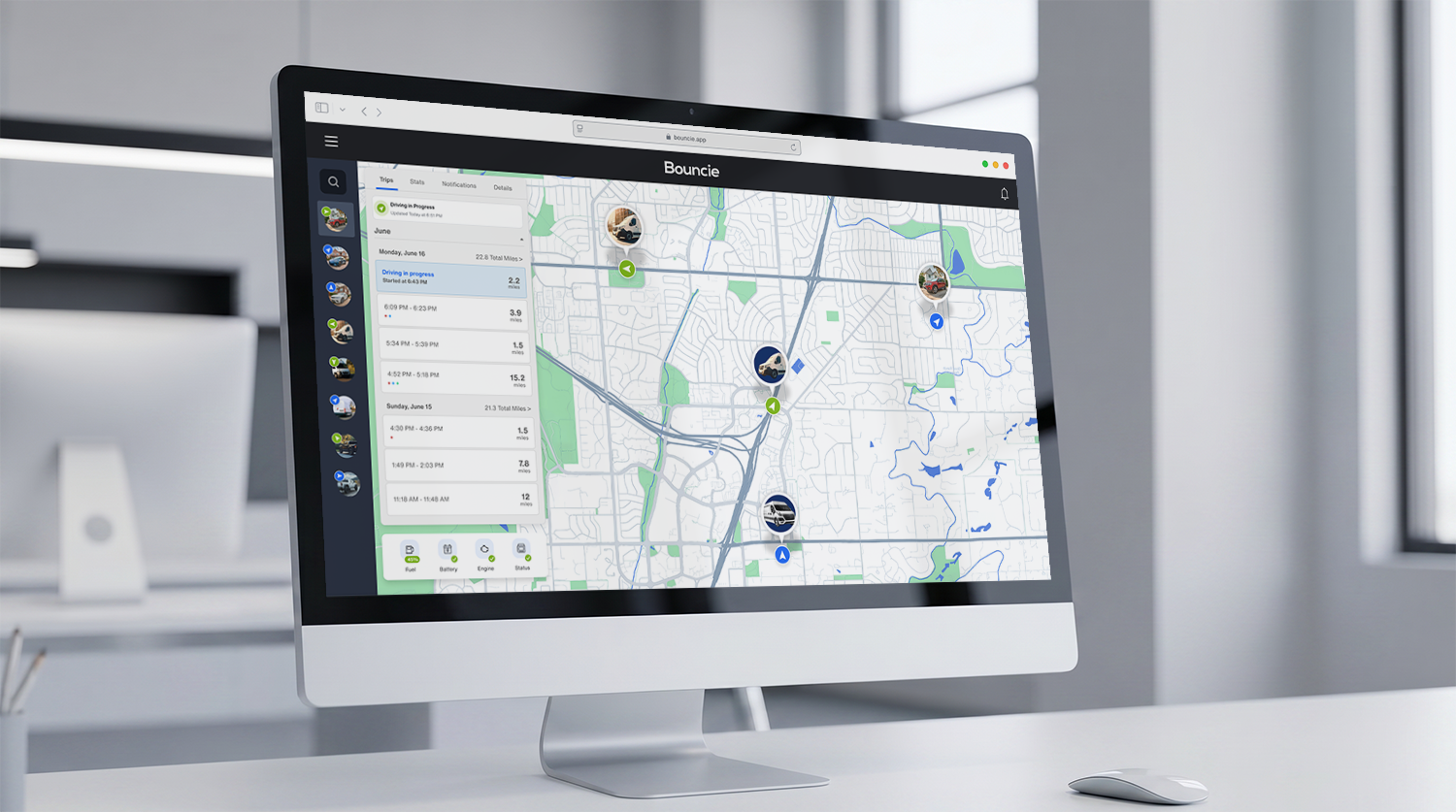
Vehicle telematics, which is the collection and transmission of operational data used to remotely monitor vehicles and driver behavior, has become such a standard technology that it is easy to take for granted today. But it wasn’t long ago that telematics seemed like science fiction come to life, even though it offered little beyond dots on a map at the time.
These dots, which represented isolated locations plotted on a static digital map, told an operations manager very little by today's standards. They represented the last known latitude and longitude coordinates of company vehicles, often delayed by several minutes. There was little to no context, no underlying vehicular health data, and zero insight into driver behavior. In most cases, telematics was simply a verification tool rather than an operations management one.
In a relatively short time, a rapid evolution in vehicle telematics has changed the very nature of fleet management. Now the technology has shifted from basic tracking to delivering real-time insights that businesses use to gain a competitive advantage. Modern telematics platforms don’t just tell you where an asset is. They can tell you how it’s being driven, how well it’s running, and how to best preserve its lifecycle.
Business leaders from fleet managers and automotive tech executives to product developers and mobility providers likely use telematics in some form today. Understanding how and why the technology changed so quickly can help ensure you’re making the most of your systems today. From dots on a map to meaningful insights, here’s a look at the evolution of vehicle telematics.
The Origins of Vehicle Telematics
In its earliest iterations during the late 20th century, telematics technology was heavily segmented. Fleet managers used primitive GPS tracking hardware that typically required hardwired installations. These early boxes were expensive and cumbersome. They generated massive data packets that were costly to transmit over the networks available at the time.
Because data transmission was such a premium commodity back then, real-time updates were a rarity. Businesses instead relied on a hybrid approach. The trackers logged GPS data locally on internal storage. Drivers then had to fill out fleet logbooks to record trip start times, destination milestones, and manual odometer readings. Someone back at headquarters had to collate the two different data sources. This created a significant administrative burden.
As telematics technology matured, early commercial systems adopted satellite tracking. While this expanded coverage and streamlined data collection, the technology still wasn’t in wide use. The hardware remained cost-prohibitive for all but the largest enterprise logistics operations.
After the mid-2000s, cellular networks became more widely available and more reliable. This created an opportunity to shift to cellular-based telemetry. Now, devices could transmit location data at a fraction of the cost, paving the way for the first true real-time updates.
During this transitional era, the corporate use cases grew, but were still relatively straightforward compared to what we have today:
- Theft recovery: Locating high-value physical assets if they disappeared from a job site or yard.
- Basic route monitoring: Verifying that a driver was generally sticking to an assigned regional territory.
- Mileage logging: Accumulating basic distance data to track asset utilization and fuel tax compliance.
As basic as it was, this was the first phase of GPS data evolution. It was an era that saw the rise of new networks and capabilities, yet it remained focused on baseline data. Any insights that could be gleaned from this information had to be found by a dedicated data analyst.
Important Milestones in the Evolution of Telematics
The shift toward cellular technology was a major milestone, but it was the first of many for telematics technology. A series of hardware improvements, advances in sensor technology, and shifts in software design pushed telematics forward at each stage. Here are four of the most important milestones:
The Integration of OBD-II Data
The most significant milestone in this evolution was the widespread opening of the On-Board Diagnostics (OBD) port. This was standardized with its second major spec, OBD-II, in the mid-1990s. Originally designed as an easy way to collect emissions data, the OBD-II port eventually became the gateway for hardware-enabled connected fleet data.
Telematics providers realized they could make tracking devices that utilized the OBD-II port, eliminating the need for complicated hardwiring. At the same time, they could gain direct access to the vehicle’s internal computer systems. Now a tracking device could read data streams directly from the engine control unit (ECU), opening up an entirely new layer of vehicle diagnostics. These systems could instantly capture diagnostic trouble codes (DTCs), monitor fuel consumption, read battery voltage, and track exact odometer values digitally.
The Introduction of Driver Behavior Monitoring
As computer chips grew smaller and more sophisticated, tracking hardware designers had more room to work with. They began to integrate more components into their devices, such as accelerometers and gyroscopes. These tools provide context into how a vehicle is being operated by tracking harsh braking, speeding, and other unsafe driving habits.
Now, simple location-focused data would no longer cut it. The technology could collect much more relevant data, and businesses demanded the ability to use it. Telematics platforms began to adapt by capturing driver behavior data and analyzing it for new insights. Now, fleet managers and business owners can address specific driving behaviors and events, targeting drivers who need coaching rather than issuing broad safety directives.
Cloud Architectures, APIs, and Mobile-First Dashboards
Following the mobile device revolution of the late 2000s, the world of software changed permanently. The clunky, on-premise desktop software platforms of the 1990s and early 2000s gave way to cloud-native, interconnected apps. The simultaneous rise of open and simple application programming interfaces (APIs) transformed telematics from a closed loop into a highly collaborative data layer.
Instead of a proprietary system to view a map, connected fleet data could now be piped directly into enterprise resource planning (ERP) systems, proprietary field dispatch software, and customer-facing mobile applications. This transition democratized fleet data, putting actionable visibility directly onto the smartphones of field managers and business owners on the move.
Cross-Industry Data Sharing
Telematics was designed to improve internal operations. While it has served that purpose and added new capabilities over the years, it has also helped businesses use their collected data to interact with other industries and external partners. Some examples of this expansion include:
- Insurance providers: With usage-based insurance (UBI) models, providers can price premiums based on actual driving data rather than through old-school demographic tables. Many businesses enjoy a significant price break as a result.
- Regulatory agencies: Thanks to real-time data collection, automation, and integration with other tools, businesses can vastly streamline regulatory reporting, improving report accuracy and ensuring compliance.
- Mobility and car-sharing platforms: Peer-to-peer vehicle hosts and car-sharing platforms wouldn't be possible without telematics. GPS tracking and related technologies help remotely monitor vehicle health, track locations between bookings, verify fuel levels upon return, and more.
Benefits for Today’s Fleet and Mobility Leaders
For today's operations managers and mobility providers, telematics offers a range of business advantages, such as:
Proactive Decision-Making
When you operate with predictive data, your management style shifts from reactive damage control to proactive optimization. Instead of responding to a customer complaint about a late technician, managers use real-time alerts and location streams to spot traffic delays early, allowing them to reroute nearby vehicles or update the customer before an issue arises.
Streamlined Regulatory Compliance and Reporting
The earliest telematics systems still imposed a significant administrative burden on back-office staff. Today’s systems can automate much of this through integration with other business systems. With automated digital logs of every trip, you can maintain verifiable safety records for easier regulatory compliance.
An Improved Customer Experience
Consumer expectations run high today. Consistent and accurate data communication is the key to meeting those expectations. Real-time data streams can provide precise ETA updates to your clients. A consistent paper trail also helps resolve customer disputes with objective data.
Affordable Operational Efficiency at Scale
Real-time visibility used to be available only to corporate giants with dedicated IT departments capable of running complex telematics systems. Modern solutions allow small to mid-sized operations to run with the same level of precision as a national carrier.
Now, you can purchase just as many telematics capabilities as you need, and scale them up or down to match your fleet’s needs. The playing field has been leveled so that even small businesses can maximize asset utilization, cut unnecessary fuel waste, and maximize daily revenue out in the field.
Bouncie’s Role in the Telematics Landscape
The evolution of telematics has made the technology more accessible, yet it has also produced a market crowded with complex, cost-prohibitive options. Bouncie stands out by redefining who can access advanced telematics. Bouncie delivers everything businesses need without the complexity that can derail telematics implementations.
Bouncie makes things accessible with its ultra-compact OBD-II tracking device. You only have to plug into a vehicle's OBD-II port, activate it in the Bouncie app, and you're ready to go. There are no specialized wiring schematics to decipher, and deployment requires no vehicle downtime.
Once activated, Bouncie starts sending data to the cloud. You gain immediate access to real-time location histories and vehicle health alerts in the Bouncie app, making for a true mobile app experience. The versatile Bouncie platform adapts to any operational context, from day-to-day dispatching to tracking local service businesses.
Bouncie’s combination of power and simplicity has made Bouncie a trusted data partner for insurance providers, vehicle rental hosts on peer-to-peer platforms, and tech-forward mobility providers alike.
FAQs About the Evolution of Vehicle Telematics
Here’s a quick roundup of the evolution of vehicle telematics in question-and-answer form:
What is vehicle telematics, and how has it changed over time?
Vehicle telematics is the integrated practice of monitoring vehicles through telecommunications and GPS technology. In its early days, it was a basic, reactive process consisting of manual logbooks and delayed location pings on a computer screen. Over time, the tech evolved to leverage cellular networks, the OBD-II diagnostic port, and advanced data analytics. These advancements help deliver real-time insights into vehicle health, driver behaviors, and more.
How can small fleets or families benefit from this evolution?
Historically, telematics software required massive upfront capital investments and dedicated IT departments to manage. The modern evolution of plug-and-play OBD-II devices and cloud-hosted mobile apps has completely democratized the technology.
Today, any business and even home users can access the same high-level vehicle visibility, safety alerts, and diagnostic insights as enterprise fleets, all for a fraction of the cost of high-end platforms.
Does Bouncie support data exports and reporting?
Yes. Bouncie ships with several useful reports, such as detailed trip histories. You can also export data or capture it via the Bouncie API to analyze driving habits over time, track fuel and battery metrics, and more. For example, you can easily export mileage and trip data for use in other business apps that support expense tracking, client billing, or tax documentation.
Is predictive maintenance part of modern telematics?
Yes, it’s a very important component of most systems today. By linking directly to a vehicle's ECU through the OBD-II port, modern telematics platforms like Bouncie don’t wait for an asset to break down on the road. The system constantly monitors for DTCs, letting management see minor engine or system alerts immediately so they can schedule a shop visit before a small issue turns into a major breakdown.
The Evolution of Vehicle Telematics: From Data Points to Smarter Decisions
The era of staring at dots on a static map has given way to an age of deep, data-driven operational intelligence. The evolution of vehicle telematics has turned what once seemed like science fiction into one of the most important business tools available today.
By eliminating operational blind spots and turning raw telemetry data into actionable business insights, modern telematics platforms allow organizations to make faster, smarter, and more profitable decisions at scale. The days of operational guesswork are officially over. To see how vehicle intelligence can transform your daily business workflows, learn more about the Bouncie smart GPS tracker.