What Is the OBD-II System? A Complete Guide for Drivers
A check engine light has a way of turning an ordinary drive into a guessing game.
You might be on your way to work, heading out for a road trip, or managing a vehicle that someone else drives every day. Then that small amber light appears on the dashboard. Sometimes it says “Check Engine.” Sometimes it says “Service Engine Soon.” Either way, it usually raises the same question: Is this something simple, or is my vehicle warning me about a major repair?
The answer usually starts with your vehicle's OBD-II system, the standardized layer that stores diagnostic data from your car's computers and makes it accessible every time you drive.
Nearly every modern vehicle has a built-in diagnostic system that monitors how the engine, emissions system, and related components are performing. When the system detects a problem, it stores information about the issue and turns on the dashboard warning light to get your attention.
The challenge is that the light itself does not tell the whole story. It tells you that the vehicle noticed something, but it does not explain what triggered the alert, how urgent it is, or what you should do next.
That is where understanding the OBD-II system becomes useful. For everyday drivers, it can take some of the mystery out of maintenance. For DIY-minded vehicle owners, it offers a better starting point before replacing parts. For small businesses and fleet operators, it can help identify problems sooner, plan repairs more efficiently, and reduce downtime.
This guide explains what OBD-II is, why it exists, and how it has evolved. You’ll learn what the check engine light is really telling you and how connected OBD devices like Bouncie help turn vehicle data into real-time insight.
What Is OBD-II?
OBD-II stands for On-Board Diagnostics, second generation. It is the standardized diagnostic system built into modern vehicles to monitor important components that affect emissions, engine performance, fuel economy, and drivability.
In plain language, the OBD-II system is your vehicle's built-in self-check system that continuously monitors key components and reports faults through a standardized port.
Your car has an onboard computer that receives information from sensors throughout the vehicle. These sensors monitor systems related to fuel mixture, engine timing, oxygen levels in the exhaust, misfires, evaporative emissions, and other functions that help the vehicle run as designed.
When the vehicle’s readings stay within the expected range, the system works quietly in the background. When something falls outside that range, the OBD-II system logs a diagnostic trouble code, often called a DTC. If the issue meets certain conditions, the system turns on the check engine light or service engine soon icon.
The important thing to know is that the light or icon is not the diagnosis. It is the alert.
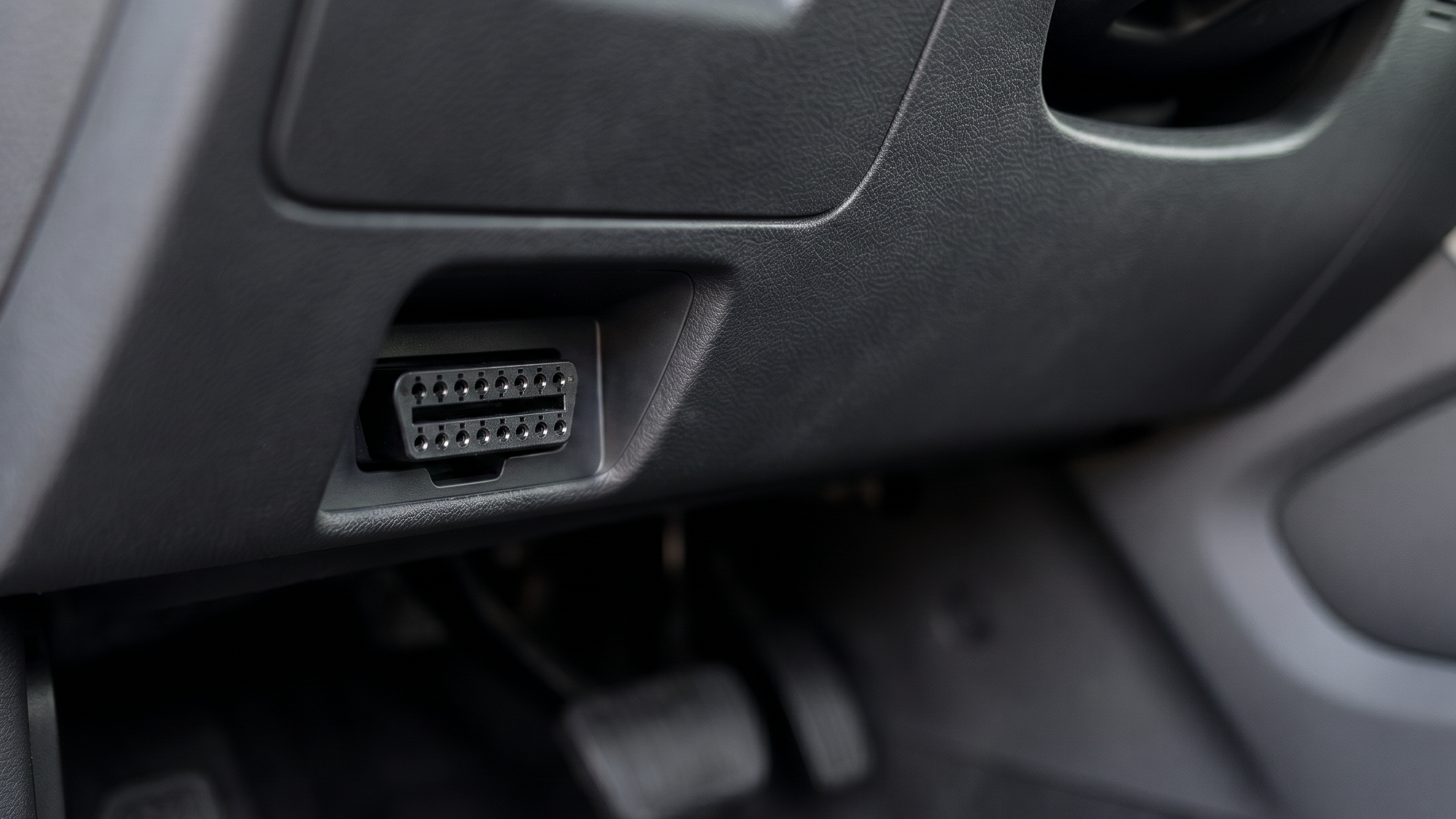
The stored code provides more specific information about what the vehicle detected. A technician, scan tool, or connected OBD device can read that code through the vehicle’s OBD-II port. This port is a standardized 16-pin connector usually located under the dashboard near the steering column.
That port is the access point for the information your vehicle is already collecting. It allows repair shops, emissions inspection programs, scan tools, and connected vehicle devices to communicate with the onboard computer. The port does more than surface stored trouble codes. It can also stream live data while you drive, which is what makes ongoing monitoring possible rather than a one-time scan.
How the OBD-II System Evolved from OBD-I
Before OBD-II, vehicles used earlier diagnostic systems that are generally referred to as OBD-I. These systems were a major step forward at the time because they gave vehicles some ability to detect problems and alert the driver. The issue was that OBD-I was limited and inconsistent.
Different manufacturers used different connectors, different code formats, and different diagnostic procedures. A technician might need different tools or instructions depending on the vehicle brand. Some systems monitored only a small number of components, and the information they provided was often basic.
That made diagnosis less efficient. A warning light might come on, but finding the actual problem could still involve a lot of manual testing and guesswork.
OBD-II changed that by creating a broader and more standardized system, making vehicle diagnostics more consistent, more portable, and more useful. It standardized not only the connector and many trouble codes but also the underlying communication methods vehicles use to report data, so the same tool could work across brands. OBD-II is why a diagnostic scan can work across many modern vehicles using the same basic access point.
That does not mean every vehicle is exactly the same. Manufacturers can still have brand-specific codes and systems. But the core OBD-II framework gives technicians, inspection programs, scan tools, and connected devices a shared starting point.
Why Do Vehicles Need OBD-II?
Many drivers think about OBD-II only when the check engine light comes on, but the system exists for a bigger reason. Vehicles are complex machines, and small problems can affect more than one part of how they perform.
A faulty sensor, worn component, fuel system issue, misfire, or emissions-related problem may start quietly. The vehicle may still start, accelerate, and drive normally. But behind the scenes, that issue can reduce fuel economy, increase emissions, affect performance, or place extra stress on other parts.
The system is designed to catch many of those problems early.
For example, a problem with an oxygen sensor can affect how the engine manages the air and fuel mixture. That can lead to poor fuel economy, rough performance, or higher emissions. A misfire can allow unburned fuel to enter the exhaust system, which may damage the catalytic converter if ignored. A small evaporative emissions leak may not change how the vehicle feels on the road, but it can still trigger the check engine light and cause an inspection issue in areas where emissions testing is required.
In other words, OBD-II is not only about passing inspections. It helps the vehicle run the way it was designed to run. The system supports three outcomes most drivers care about: cleaner operation, better fuel economy, and fewer surprise repairs. By identifying problems sooner, OBD-II gives drivers and technicians a better chance to correct issues before they become more expensive.
For businesses, that early warning can be even more valuable. A personal vehicle with an ignored check engine light is frustrating. A work vehicle with an ignored check engine light can mean missed appointments, delayed service calls, lost productivity, and unexpected downtime.
Does My Car Have OBD-II (or OBD2)?
For most drivers in the United States, the answer is probably yes.
As a general rule, gasoline-powered cars and light trucks from model year 1996 and newer, sold in the United States, are equipped with OBD-II. Many diesel vehicles from the late 1990s and newer also use OBD-II systems, though compatibility can vary by vehicle type, weight class, and model year.
The easiest way to check is to look for the OBD-II port. It is usually located under the driver’s side dashboard, near the steering column. In some vehicles, it may be behind a small cover or positioned slightly to the left or right of the steering wheel. The connector is typically trapezoid-shaped and has 16 pins.
This port matters because it is what makes diagnostic access possible. When a repair shop reads your check engine light, they connect to this port. When an inspection station checks readiness monitors, it often uses this port. When a connected device like Bouncie is installed, it plugs into this same port.
The system is already there and the vehicle is already monitoring itself. The real question is whether you have an easy way to see what it is reporting.
Is the OBD-II System the Same in Every State?
OBD-II is used across the United States, not just in one state or region. While inspection requirements vary by location, the diagnostic system itself is built into the vehicle at the manufacturer level, and that distinction is important.
A driver in Texas, Florida, Ohio, New York, California, or anywhere else in the country may face different local inspection rules. Some areas require emissions testing, while some do not. Some inspection programs use OBD-II checks, while others have different requirements based on vehicle age, fuel type, or even county of residence.
The vehicle's OBD-II system is not tied to one state's rules. It is part of the broader diagnostic and emissions framework used in modern vehicles sold throughout the country.
This is why a mechanic in one state can read codes from a vehicle purchased in another state. It is why a basic scan tool can work on many different vehicles. It is also why connected OBD devices can support a wide range of modern passenger vehicles.
The local inspection rules may change. The OBD-II port and core diagnostic system are much more consistent.
What Should I Do When the Check Engine Light Comes On?
The first thing to do is notice whether the light is steady or flashing.
A steady check engine light usually means the vehicle has detected a fault that should be checked soon, but it is not always an immediate emergency. If the vehicle feels normal, you may be able to continue driving for a short time. However, you should not ignore the light for long. Even a minor issue can affect fuel economy, performance, or other components over time.
A flashing check engine light is different. That should be treated as urgent. A flashing light often indicates a serious misfire, and continuing to drive can damage the catalytic converter or other expensive parts. If the light is flashing, pull over when it is safe, avoid heavy acceleration, and have the vehicle checked as soon as possible.
If the light is steady, one simple first step is to check the gas cap. A loose, damaged, or missing gas cap can trigger an evaporative emissions code on some vehicles. Tightening the cap may solve the issue, though the light may not turn off right away. The vehicle may need several drive cycles before it confirms the problem is resolved.
Still, the gas cap is only one possibility. The same check engine light can point to many different issues, including oxygen sensor problems, ignition coil failures, catalytic converter efficiency issues, mass airflow sensor trouble, evaporative system leaks, or misfires.
That is why reading the diagnostic trouble codes matter. Without the code, the check engine light is just a warning. With the code, you have a starting point.
It helps to be realistic about what OBD-II can and cannot do. A trouble code tells you which system the vehicle flagged, not always the exact part that failed. Two vehicles can log the same code for different underlying reasons, which is why diagnosis still involves testing. OBD-II narrows the search and reduces guesswork. It does not replace a proper diagnosis.
Does the Check Engine Light Always Mean an Emissions Problem?
The check engine light is closely connected to emissions, but that does not mean the issue is only about emissions. Modern vehicles balance emissions, fuel economy, and performance together. When one system falls out of balance, the others can be affected. A sensor that helps the engine run cleanly may also influence acceleration, idle quality, and fuel efficiency.
That is why the check engine light can appear for issues that feel very different to the driver. Sometimes the vehicle may feel completely normal. Other times it may idle roughly, hesitate, use more fuel, smell unusual, or feel underpowered.
This is also why ignoring the light can cost money. A vehicle with a steady check engine light may continue driving, but that does not mean it is operating efficiently. You could be burning extra fuel, stressing another component, or delaying a repair that would have been simpler if addressed earlier.
For owners who want to understand what is happening before visiting a shop, diagnostic trouble codes are especially helpful. They give a more specific starting point than the light alone, which helps you ask better questions and make more confident repair decisions.
Do I Have to Go to the Dealer to Fix an OBD-II Problem?
In most cases, you do not have to go to the dealer just because the check engine light is on.
Any properly equipped repair shop can read OBD-II codes, perform diagnostic tests, and repair many common problems. Independent shops, national repair chains, mobile mechanics, and dealerships all use OBD-II information as part of the diagnostic process.
There are situations where a dealer may make sense. If the vehicle is under warranty, especially for an emissions-related component, warranty repairs may need to be handled by an authorized dealer. Some manufacturer-specific issues, software updates, recalls, or advanced diagnostics may also be easier to address through the dealership.
The bigger point is that knowing the code before you arrive can make you a more informed customer. It does not mean you should diagnose the vehicle entirely on your own or assume the first code equals the exact repair. But it does give you context.
If a shop recommends a repair, you can ask how that repair relates to the code. You can ask whether additional testing was performed. You can ask whether the issue is urgent or something that can be scheduled.
For businesses, this information can help with maintenance planning. If one vehicle reports a minor issue and another reports something more urgent, you can prioritize service accordingly instead of treating every warning light the same way.
How Does OBD-II Affect Emissions Inspections?
In many areas, OBD-II plays a major role in vehicle emissions inspections.
Instead of relying only on tailpipe testing, many modern inspection programs connect to the vehicle’s OBD-II system and check whether the vehicle is reporting emissions-related faults. If the check engine light is on because of an active emissions-related issue, the vehicle may fail inspection until the problem is repaired.
One concept that often surprises drivers is the readiness monitor. Readiness monitors are self-check routines that the vehicle performs to confirm whether certain systems are operating properly. Some monitors run continuously. Others need specific driving conditions before they can complete. For example, a vehicle may need a mix of city driving, highway driving, warm-up time, steady speeds, or certain fuel conditions before all monitors are ready.
This matters after repairs, a dead or disconnected battery, or cleared codes. When codes are cleared or power is lost, some readiness monitors may reset to "not ready" or "incomplete." The check engine light may be off, but the vehicle may not yet have completed the self-checks required for inspection.
That can create a frustrating situation. A driver fixes the problem, clears the code, goes straight to an inspection station, and fails because the monitors are not ready.
The solution is usually normal driving time. The vehicle needs to complete its drive cycles so the OBD-II system can rerun the required checks. In some cases, a shop can explain the specific drive cycle for that vehicle, but many drivers simply need to drive normally for several days before returning for inspection.
Inspection rules vary by state and region, so drivers should always check their local program requirements. The general principle is useful anywhere: the OBD-II system does not just report active problems. It also reports whether the vehicle has completed the checks needed to verify that key systems are working.
Can I Still Use Aftermarket Parts or Modify My Vehicle?
OBD-II does not prevent vehicle owners from using aftermarket parts. Many replacement parts are designed to work with OBD-II-equipped vehicles and function like the original part.
For routine repairs, this is common. Replacement oxygen sensors, catalytic converters, ignition components, fuel system parts, and other components may be available from both original equipment manufacturers and aftermarket suppliers. The key is compatibility.
A replacement part should be designed for your specific vehicle and should meet applicable emissions requirements. If it does not perform within the expected range, the OBD-II system may continue detecting a problem and turn the check engine light back on.
This is especially important with catalytic converters because not all catalytic converters are interchangeable. The correct converter depends on the vehicle, engine, emissions certification, and the rules where the vehicle is driven or registered. Installing the wrong converter can lead to inspection failure, recurring trouble codes, poor performance, or additional repair costs.
For DIYers, the safest approach is to research before buying parts. Confirm the part is compatible with the exact year, make, model, engine, and emissions configuration of the vehicle. If you live in an area with stricter inspection rules, check whether the part has the appropriate emissions approval for your location.
How Much Does OBD-II Add to a Vehicle’s Cost?
OBD-II may sound like a major add-on, but much of the system relies on hardware and software already built into modern vehicles. Vehicles already need computers, sensors, and control modules to manage fuel injection, ignition timing, emissions controls, and other functions. OBD-II uses that information to monitor performance and report faults.
For owners, the value can show up in several ways. A technician can diagnose a problem more efficiently because the vehicle provides a starting point. A small issue can be caught before it damages something else. A driver may discover a problem that is hurting fuel economy before wasting money at the pump for months. A business may avoid sending a vehicle out for another full day of work when it is already reporting an urgent issue.
OBD-II does not eliminate repair costs. Vehicles still wear out. Sensors still fail. Parts still need replacing. But the system helps reduce blind guessing, and that is valuable. The most expensive vehicle problem is often the one you do not know about until it interrupts your day.
What Is OBD-III? The Shift Toward Remote Diagnostics
OBD-II is based on the idea that diagnostic information can be accessed through the vehicle’s onboard system and physical diagnostic port. Traditionally, that meant someone had to connect a scan tool to the vehicle to read the information.
OBD-III, often described as remote OBD, is the idea of diagnostic information being transmitted remotely instead of waiting for a shop visit, roadside scan, or inspection station connection.
In theory, remote OBD could make it easier to identify emissions problems, confirm repairs, and reduce the delay between a vehicle detecting a fault and someone taking action. Instead of the vehicle storing information silently until someone plugs in, the data could be sent over a network.
For everyday drivers, the most useful version of that idea is already available through connected OBD devices.
A connected OBD device plugs into the vehicle's OBD-II port and sends information to an app. This is the basis of modern telematics, where the live data and trouble codes flowing through the port are transmitted to software you can check from anywhere. Instead of waiting until you visit a shop, you can receive alerts when the vehicle reports a diagnostic trouble code.
This is where OBD-II becomes more practical for modern vehicle owners. The vehicle has been collecting diagnostic information all along. Connected technology simply makes that information easier to access, understand, and act on.
Turning Your OBD-II Port into Real-Time Insight with Bouncie
The OBD-II port is more than a place for repair shops to plug in a tool. It can also be the connection point that turns your vehicle’s built-in diagnostic system into real-time insight.
Bouncie turns most vehicles into a connected car. It plugs into the OBD-II port on compatible vehicles and helps bring important vehicle information into an app. Instead of waiting for a dashboard light, wondering what it means, or scheduling a diagnostic visit just to get basic context, Bouncie can help you see vehicle health alerts and diagnostic trouble code information sooner. That matters because timing matters.
If a check engine light comes on during a busy week, many drivers keep going and hope it is nothing serious. Sometimes that works out. Sometimes it does not. With a connected OBD device, you can get a better sense of what the vehicle is reporting and decide what to do next.
If the issue appears minor, you can schedule service with less panic. If the alert points to something more urgent, you can avoid unnecessary driving and address it before it creates a bigger repair. If the issue appears after a recent repair, you have information to share with the shop. If you manage multiple vehicles, you do not have to rely on each driver noticing, remembering, and reporting the warning light.
Bouncie also adds context beyond the code itself. Vehicle health is only one part of the story. Trip history, driving behavior, location, and vehicle activity can help owners and businesses understand how a vehicle is being used and whether patterns are developing over time.
For families, that might mean knowing when a vehicle reports a problem while a teen driver or older family member is using it. For small businesses, it might mean spotting vehicle issues before a service vehicle is sent across town. For fleet operators, it can help centralize visibility across multiple vehicles instead of treating each dashboard as a separate mystery.
A check engine light says, “Something needs attention.” Bouncie helps turn that into, “Here is what the vehicle is reporting, and now you can decide what to do next.”
The Bottom Line: The OBD-II System Turns Guesswork Into Data
OBD-II is one of the most important systems in modern vehicles, even though many drivers rarely think about it until the check engine light appears.
It is the standardized onboard diagnostic system that monitors key components, stores diagnostic trouble codes, supports emissions inspections, and gives technicians a better way to identify problems. It helps explain why a warning light came on, whether a vehicle is ready for inspection, and where repairs should begin.
For drivers, the main lesson is this: the check engine light is not the full story. It is only the signal that the vehicle has something to report. You can respond by guessing, ignoring it, or waiting until a repair shop tells you what the vehicle already knows. Or you can access the data sooner.
That access can come from a technician, a scan tool, or a connected OBD device. For drivers and businesses that want real-time visibility, Bouncie makes the OBD-II port more useful by turning vehicle data into alerts and insights you can see from your phone.
Your vehicle is already monitoring itself. With the right connection, you can finally listen. Start listening to your vehicle today by seeing what Bouncie has to offer.