Devices to Prevent Teen Speeding: What Actually Changes the Behavior
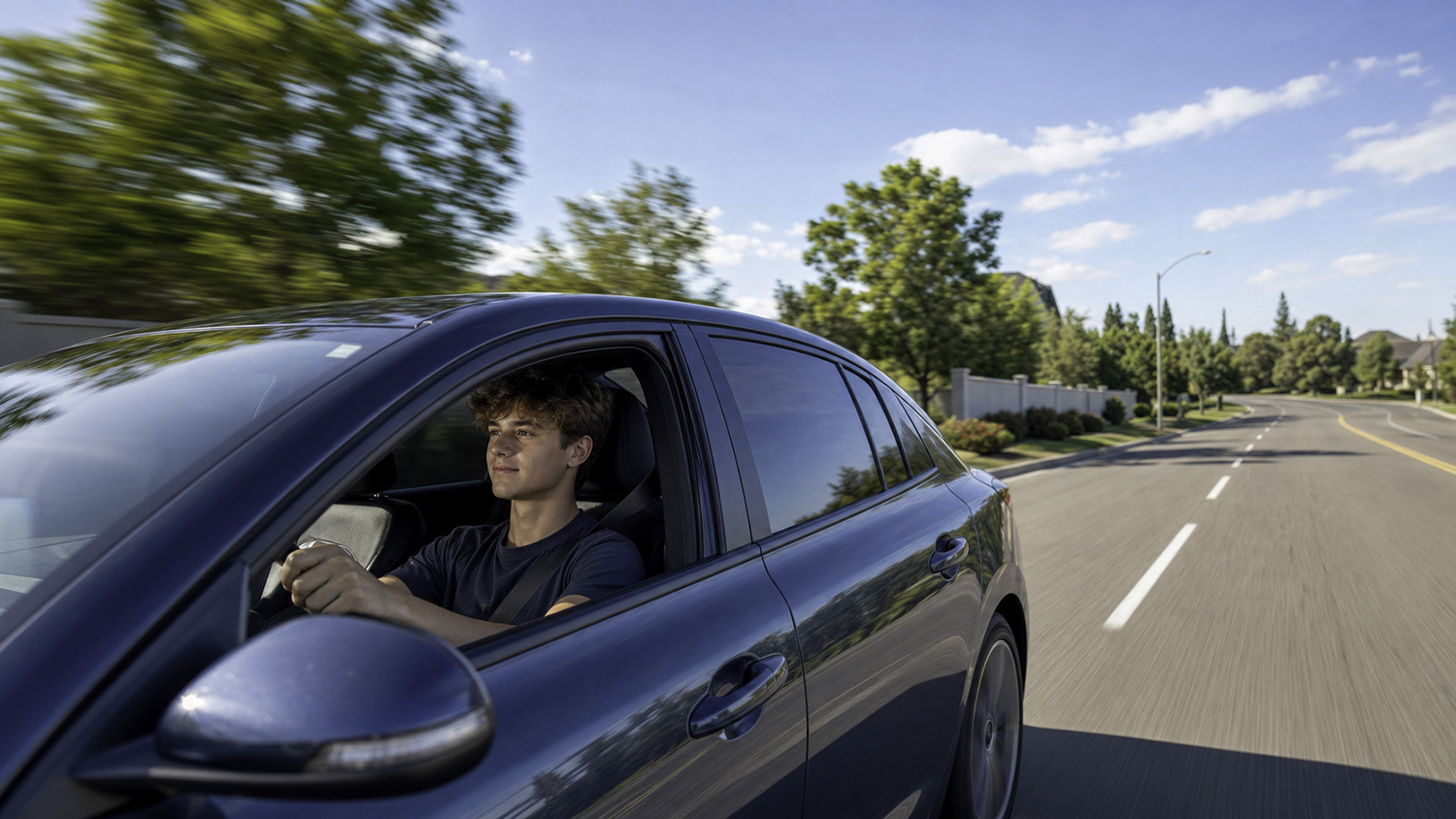
As the parent of a teen driver, you’ve already had the conversation about driving safely. You have probably had it more than once. Your newly licensed teenager nodded, agreed to the rules in the driveway, and genuinely meant it at the time. But between your parental intuition and the evidence you see, it’s becoming clear they aren’t taking your speeding warnings seriously.
As an experienced adult driver, you understand the dangers of driving too fast. Your teenager, flush with the freedom a brand-new driver’s license affords, feels invincible. To them, driving “a little fast” is no big deal because they see it happening all around them.
You Can’t Ride in the Passenger Seat Forever
Even though you have tremendous influence on your child, you have no physical presence once the car leaves the neighborhood. You can’t ride shotgun with them for the rest of your life, and you wouldn’t want to if you could. You want your new teen driver to take the risks of speeding seriously and adjust their driving behavior now.
This situation may have led you to search for devices to prevent teen speeding. Those searches usually turn up speed limiters and governors, which are products that cap how fast a car can go. Some are aftermarket devices and some are settings built into newer vehicles. A limiter can hold a car under a set speed, but it does not change how your teen chooses to drive in a car that doesn’t have one. Just as you can’t ride in the passenger seat forever, you can’t rely on a governor to keep your child safe.
The Bouncie device is not one of those products. It is not a speed limiter, a governor, or a kill switch, and it cannot slow, stop, or disable a car. It is a small device that plugs into the OBD-II port in your teen’s car and reports how the car was driven, with speed alerts, notifications for hard braking and rapid acceleration, and a detailed history of every trip. That gives you specific, objective information to talk through with your teen, which is what actually changes dangerous behavior.
Do Devices to Prevent Teen Speeding Actually Work?
Can you install a reliable device to prevent teen speeding in a family vehicle? Yes, but only one kind of device does it directly, and it works on the car rather than the driver. Speed limiters and governors restrict the vehicle. Reporting devices such as the Bouncie device tell you what happened and leave the response to you.
When you look for a speed limiter for a teen driver, you’ll likely see governors first. Aftermarket governors typically require professional installation. Some newer vehicles also include built-in teen driver settings tied to a specific key fob.
There’s a case to be made for speed governors. If your teen always drives one household vehicle and you keep the setting in place, you can be confident that car won’t exceed the cap. However, the limitations of this approach become obvious quickly.
- A governor applies only to one vehicle and won’t stop your teen from speeding in another car.
- It does nothing about other risky habits, such as frequent hard braking or rapid acceleration.
- A top-speed cap set high enough for highway driving still lets your teen speed on a 35 mph residential road.
Perhaps a governor’s biggest shortcoming is that it forces decisions on a teen driver rather than teaching them to drive safely. If you limit the car your teen drives in high school, think about what happens when they drive a car without that limit. Now compare that to a teen who saw their own speed data on a familiar street and actively chose to slow down on that street for the next six months. The second scenario is the outcome a parent actually wants.
A reporting device works the other way. The Bouncie device reports what happened on every drive, so a parent can sit down with their teen, point to specific moments on specific trips, and help them learn from their own driving.
Why Teens Speed, and What Has Been Shown to Change It
Data only changes behavior when a teen can connect it to their own driving. That is why it helps to understand why teens speed in the first place.
The first thing to understand is that teens are more likely than older drivers to speed, according to the CDC, and it is often not because they don’t know the rules. Teens generally know the posted limit and know speeding is dangerous. In many cases they are not consciously driving too fast. They are still learning to judge their speed against road conditions in the moment.
Ultimately, this is an experience problem, not an attitude problem.
In many cases, a teen’s speed creeps up rather than spikes, driven by situations such as running late for curfew or driving a familiar route that “feels” safe. Passengers matter too. The CDC reports that teen passengers raise an unsupervised teen driver’s crash risk, and that the risk climbs with each additional passenger. Nighttime driving is particularly dangerous for teen drivers, the CDC notes. Open roads with no traffic to set the pace can also let speed drift upward.
Kitchen-table lectures are often too general and come too late, because they address broad behavior from days ago. Research points to a different approach. In an IIHS study of in-vehicle monitoring, teen speeding dropped consistently only when parents were also told about it, and in-car alerts on their own were not enough. What changes the behavior is specific feedback, delivered promptly, with a parent involved.
The Accountability Loop That Changes Teen Speeding
The accountability loop is a four-step routine for changing how a teen drives. You find out what happened, discuss it with your teen, apply a consequence when it is warranted, and recheck the same road weeks later. Repeated over time, it turns your teen’s own driving data into lasting habits.
Step 1: Know
Define what you want to measure. “Speeding” is too broad to quantify, but “driving more than ten miles per hour over the limit on a residential street” is measurable. Then decide how you will see it. A speed alert can tell you when the car passes a top speed you set, while speeding against the posted limit on a slower road shows up afterward, when you review the trip.
Setting a measurable line comes first because it sets the tone for the rest of the loop, which runs on real-world data rather than general feelings.
Step 2: Discuss
Next, discuss your findings with your teenager. Open the conversation with data from a specific trip rather than general driving patterns. For example, “On this road, on this evening, you were going this fast where the limit is this.” That approach is much more likely to resonate than a general statement such as “I’m noticing that you drive over the speed limit a lot.” Specificity is key because it frames the conversation productively rather than letting it go in circles.
Step 3: Consequence
If your teen keeps going past the line you defined in Step 1, apply a consequence.
For a speeding teenager, a consequence can be anything that matters to them, such as losing the keys for a set number of days. Tie it to the specific trip you just discussed so the link between the behavior and the result is clear. If you already have written driving rules with your teen, use the consequences you agreed on there rather than inventing new ones. Keep it proportionate enough that you will actually follow through.
Step 4: Recheck
Use historical data to recheck the same road at the same time of day across different weeks. This comparison is key to changing driving behavior. When improvement happens, name it out loud. If the loop only ever produces bad news, everyone in it, including you, will come to ignore it.
Fit the Loop to Your Teen
A few adjustments keep the loop productive over time.
- Adjust this loop based on real-world results. How much autonomy is your teen actually ready for right now? Loosen your control as your teen shows they are learning.
- Decide whether speed is your real concern, or whether it is passengers or phone use. Aim the loop at the most serious risk, because a parent trying to watch everything ends up watching nothing.
- Determine if you want alerts as they happen or a weekly review. You may want regular notifications on your phone for a brand-new driver. A weekly review may be sufficient with a teen who is showing progress.
- Recognize that the Bouncie device only reports on the car it is plugged into. If most of your teen’s driving happens in a friend’s car or another vehicle without one, you won’t get the full picture, and the conversation will have to carry more of the load.
Avoid These Common Mistakes
Even though using the Bouncie device to monitor driving habits isn’t surveillance, how a parent uses it can still feel that way. Here are some common implementation mistakes to avoid:
- Installing something secretly. A teenager is likely to find the device, and the resulting breach of trust will outlast any speeding it caught.
- Leading with a pattern, not specifics. Saying "You are always speeding" invites an immediate denial. Saying "You hit forty-two on Maple at eight last night" invites a real explanation.
- Reacting to every number. A few miles over the limit on a highway on-ramp is not the same as twenty over past an elementary school. Treating them equally teaches your teen that your feedback is just noise.
- Inventing consequences while angry. This guarantees they will be disproportionate and completely unenforceable.
- Expecting the device to parent. The data creates an opportunity for a conversation, but it doesn’t have the conversation for you.
- Assuming a monitor restricts the car. It only reports. If you expect the car to refuse the speed, you won't run the loop, and nothing will change.
- Never closing the loop. Without the recheck, the teen learns the topic goes away if they just wait you out.
Where Bouncie Fits Into the Accountability Loop
The Bouncie device is not a limiter or a governor. It can’t cap a vehicle’s speed or act like a kill switch. It tells the parent what happened so the parent can act on it, which makes the Bouncie device a tool for the Know, Discuss, and Recheck steps of the accountability loop. The Consequence step stays with you.
The Bouncie device, paired with Bouncie’s teen driving app, is the primary driver of the Know step of the loop. Its speed alerts notify you when the car passes a top speed you choose, such as 75 mph, so you find out the same day rather than a month later. For slower roads, open the trip timeline after a drive and turn on speed limits to see everywhere your teen went over the posted limit. Notifications for hard braking and rapid acceleration add context, and a pattern matters more than a single event. An occasional hard brake often means your teen reacted properly, while frequent hard braking can signal following too closely.
For the Discuss step, Bouncie Speed Bands color your teen’s trip map by speed, so you can point to one exact stretch of one specific road instead of making a general accusation that is easy to deny. For the Recheck step, trip history lets you compare the same road at the same time of day weeks later and see whether your teen’s driving has changed.
Common Questions About Teen Speeding Devices
Are there trusted technologies to help parents manage teen speeding?
Yes, and they fall into two groups. Built-in teen driver settings and aftermarket governors limit how fast the car can go. Plug-in reporting devices such as the Bouncie device show you speed, trips, and driving events so you can address the behavior with your teen.
Who offers affordable safety tools for parents of new teen drivers?
Start with the car you already have. Many newer vehicles include teen driver settings at no extra cost, so check the owner’s manual first. The Bouncie device adds speed alerts and trip history to most cars built since 1996 for the cost of the device plus a monthly subscription. Current pricing is on the Bouncie for Families page.
Aim for the Driver, Not the Car
As a parent with a problem, you don’t want to wait for a solution when your teen’s safety is on the line. A speed limiter or governor can cap one car, but it does not change the driver. What changes a teen’s speeding is specific, prompt feedback from a parent, based on their own trips and repeated until the habit sticks. When you search for devices to prevent teen speeding, look for one that gives you that information.
The Bouncie device is also quick to set up. Plug it into the OBD-II port in your teen’s car and activate it in the Bouncie app. From there, it gives you real data on how your teen drives, which is what makes the know, discuss, consequence, recheck loop work. To get started, learn more about Bouncie for Families.