How to Find a GPS Tracker on Your Car (and What to Do If You Find One)
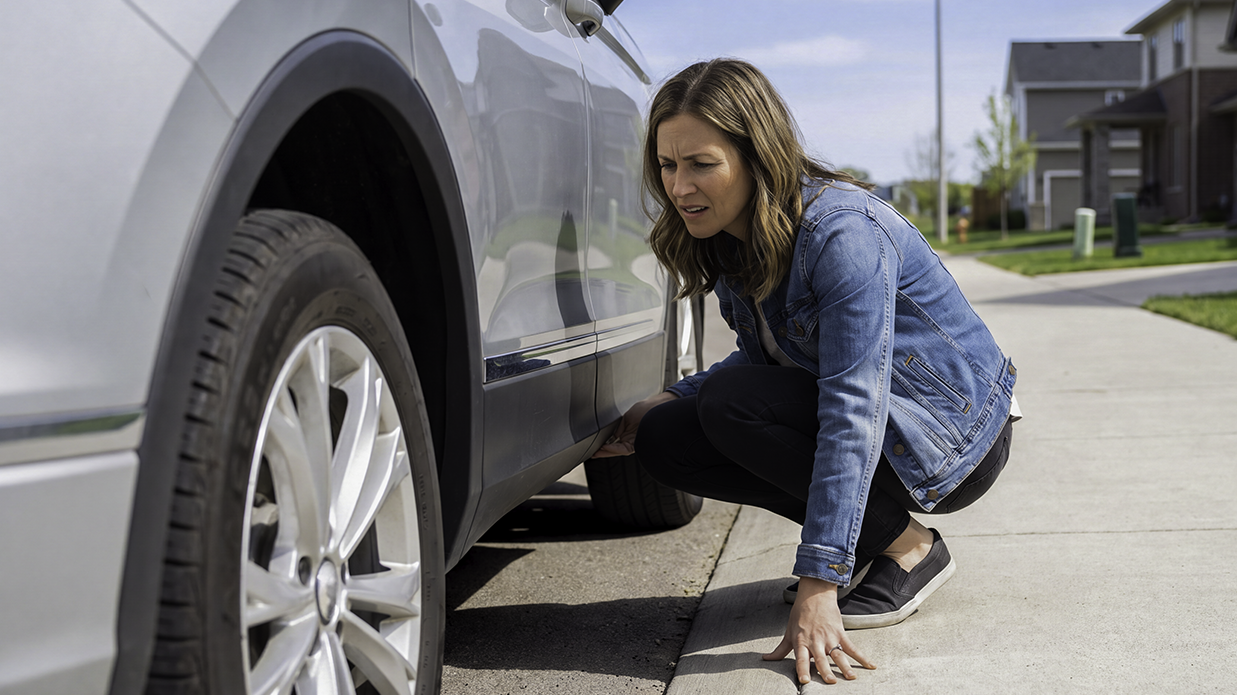
Ever feel like you’re being watched? We’ve all had that eerie sensation from time to time. In the past, you might look around and, when you don’t see anybody, convince yourself that your mind is playing tricks on you. But in the time we live in today, there doesn’t have to be another person in close proximity to get that feeling. Cameras are everywhere, from doorbells to street corners, and most smartphone apps ask permission to use your location. Tracking you agreed to is part of modern life. Tracking you never agreed to is something else entirely.
If you’re dealing with a messy breakup or a complicated custody dispute, it’s the worst time to feel anxious about your privacy. When a series of events makes it feel like someone must be monitoring your movements, you start thinking about how they might be doing it, and then the question arises: Did they put a GPS tracker on my car?
Such thoughts don't make you paranoid. They make you proactive. At Bouncie, we build vehicle trackers, so we know what they look like, where they fit, and how they differ from the devices people hide. That's why we've put together this guide.
To be clear, this guide is about finding a tracker someone else placed on your vehicle without your knowledge or consent. It is not about disabling a tracker you installed yourself, or one your family or employer installed and told you about. Consent-based GPS tracking has plenty of legitimate uses, and our guide on how to track my car explains them.
How to Find a GPS Tracker on Your Car in Five Steps
- Search the common hiding spots: Check the undercarriage, wheel wells, bumpers, cabin, trunk, engine bay, and OBD-II port with a flashlight and an inspection mirror.
- Sweep with electronic tools: Use your phone's built-in tracker alerts, a Bluetooth scanner app, or an RF detector.
- Check connected accounts: Review your car's connected-services app and your phone's location sharing.
- Rule out a legitimate device: Confirm it wasn't installed by an employer, a family member, an insurer, a lender, a rental company, or a previous owner.
- Document before you act: Photograph what you find, leave it in place, and contact the police or an advocate.
How Hidden GPS Trackers Actually Work
A hidden GPS tracker is a small device that someone places on or inside a vehicle, without the driver's knowledge, to report the vehicle's location to their own phone or computer. To find one, you first need to know what you're looking for. Dedicated GPS trackers generally fall into two main categories, and Bluetooth tags work differently from both.
The first is the battery-powered GPS tracker. These devices typically come with a built-in magnet, which makes them incredibly easy to attach to a car in places you never look. They are typically housed in a small, weatherproof plastic or rubber casing. They run on internal batteries that must be recharged or replaced. Depending on how often they report their location, they last anywhere from a few days to several months, and some long-life models advertise a year or more.
The second is the hardwired GPS tracker. Because they are wired directly into the vehicle's electrical system, they have no batteries to recharge. Hardwired trackers can also be well hidden, usually under the hood or behind the dashboard.
In either case, we’re not talking about bulky hardware. Most modern trackers are no bigger than a deck of cards or a small matchbox. Their compact size makes them easy to overlook in a casual search.
If you want more detail on how these devices differ, check out our article on the types of tracking devices. As for how they work, most GPS trackers calculate their position from GPS satellites and send that location over a cellular network. Bluetooth tags such as Apple AirTags have no GPS or cellular connection. They report their location through nearby phones on the tag maker's network. The person monitoring the car typically uses a smartphone app or a web-based dashboard to track the current location.
Where to Look for a GPS Tracker on Your Car
Even if car GPS trackers are well hidden, you can often find them by checking common installation spots.
Before starting your search, change into clothes you don’t mind getting dirty, grab a bright flashlight, and use a mechanic’s inspection mirror on an extendable pole. The mirror lets you inspect underneath your vehicle without crawling on the ground or your garage floor.
Now for how to find a GPS device on your car. Start looking in these common locations:
- The undercarriage is the most common hiding spot for magnetic trackers. Sweep your flashlight along the frame rails and around the exhaust and fuel tank. Then run your hand along the inner lip of all four wheel wells to feel for a small box stuck to the metal.
- The cavities inside the front and rear bumpers are favorite installation spots because they’re easy to reach without opening the vehicle or crawling underneath it. Feel into the gap between the plastic bumper cover and the metal structural beam to see if there’s anything there.
- The cabin is where small Bluetooth tags are most often dropped, because no tools are needed. Check under and between the seats, in the seat-back pockets, under the floor mats, and in the glove box and center console.
- The trunk and spare tire well are rarely opened and have plenty of room, which makes them prime hiding spots. Also check behind the side trunk trim panels near the taillights.
- The engine bay is where you will often find hardwired trackers that draw power from the vehicle’s electrical system. Pop the hood and inspect near the fuse box, battery, or air filter housing. Look for unfamiliar wires zip-tied haphazardly to the factory wiring harness.
- Finally, check the OBD-II port. A third type of GPS tracker hardware installs in this standard diagnostic port. The port itself is typically located under the dashboard on the driver’s side, and a tracker plugged in here will be very compact.
Like hardwired devices, OBD-II trackers run on the car's electrical system. Unlike hardwired units, they install by simply plugging into the port. A device plugged in here is easy to spot if you look under the dashboard, which makes it an unlikely choice for someone trying to track you covertly. The port is more often used by legitimate, visible devices, such as an OBD port GPS tracker a family or business installs openly, but it is still worth checking.
The Next Step: Electronic Detection Methods
If you haven’t found a tracker after a physical search, the next step is to use electronic detection methods. These tools and apps are widely available and not difficult to use:
- RF (radio frequency) detectors: Most products sold as a GPS detector for cars are RF detectors, which pick up radio signals of all kinds. Because a tracker sends its data wirelessly, the detector can alert you to a signal spike when it transmits. Many battery-powered trackers don't transmit continuously, however, and many only report when the vehicle is moving. Turn off your own phone and other devices first, sweep slowly around the car, then repeat the sweep with the engine running or while someone else drives. A silent RF detector does not prove the car is clean.
- Bluetooth tag alerts and scanner apps: If you suspect a Bluetooth tag (like an Apple AirTag) has been slipped into your car, start with the protection already on your phone. iPhones running iOS 17.5 or later and Android phones running Android 6.0 or later show an "Item Found Moving With You" alert when an unknown tag travels with you, no matter which platform the tag is paired with. Android phones can also run a manual scan for unknown trackers from the settings menu. Free Bluetooth Low Energy (BLE) scanner apps add another layer.
- Professional sweep services: If you are dealing with a high-stakes situation involving active stalking or severe harassment, it may be best to hire a mobile counter-surveillance technician. They use professional-grade equipment that can find devices a consumer RF detector misses, including trackers that are not currently transmitting.
Check Your Car's Built-In Connected Services
A tracker isn't always a separate device. Many newer vehicles have connected services that give whoever is signed in as the owner in the manufacturer's app access to location, trip history, and sometimes remote controls.
If an ex-partner or former co-owner still has access to that account, they may be able to follow your car without installing anything. Check the vehicle's connected-services app and settings for linked users and devices, and contact the manufacturer if you need someone's access removed. Also review location sharing on your own phone, since a shared family or map app can reveal the same information.
How to Tell a Tracker from Normal Car Electronics
Automotive electrical systems have always been complex, but today’s cars have a large number of sensors and other electronics crammed into every free space. It can be difficult to distinguish between all the wires, black boxes, modules, and something that’s not supposed to be there. If you see something you can’t identify, don’t immediately assume the worst.
Instead, consider whether what you see looks professionally installed. Factory modules such as keyless entry receivers, tire pressure monitor units, and even OEM GPS units will be securely bolted or bracketed in place. Their wiring will be neatly wrapped or zip-tied into the thick factory wiring harness.
In most cases, a secretly installed GPS tracker will look out of place. It might be magnetically stuck to a surface, dangling from a thin, brightly colored wire, or wrapped haphazardly in electrical tape.
Never pull random wires, as you could cause an electrical issue with your car. Take a clear, well-lit photo of the suspicious device and search its part number online. Better yet, take the vehicle to a trusted mechanic during a routine service visit and ask them to identify the component.
What If It’s Supposed to Be There?
Before you assume the worst, keep in mind there may be a legitimate reason for a tracker you didn't expect to find.
For example, if you use your car for business, a fleet manager at work may have installed it. You likely had to consent to the installation, but if you forgot about signing that consent form, you might also have forgotten that the device was there.
If your family shares your car, someone else in your household might have installed it for a legitimate purpose, such as monitoring a new teen driver. Many insurers also offer discounts through usage-based programs that record driving behavior with a plug-in device or phone app, and that may be why a family member installed one.
Rental cars (and used cars that were once part of a rental fleet) often have tracking devices installed too. Some auto lenders require a GPS device on financed vehicles, which should be disclosed in your loan paperwork. And a used car may still carry a tracker the previous owner installed and never removed.
All this is to say, the GPS tracker may be supposed to be there. Rule these reasons out before you take other action, but never let them delay a call to the police if you feel unsafe.
What to Do If You Find a Tracker
If your search turns up a GPS tracking device that should not be there, your first instinct might be to rip it off the car and throw it in the trash. Don't. The device could be evidence in a criminal investigation. Photograph or video it exactly as you found it, and note the date, the time, and where on the vehicle you found it.
Next, review our guide to GPS tracking laws by state to understand the rules where you live. Many states prohibit placing a tracker on someone else's vehicle without their consent, but the rules vary, and in many states the answer depends on who owns the vehicle and who drives it. For more insight into the ethics of GPS tracking, consent, and the law, check out our article on the ethics of vehicle tracking.
Regardless of your state's laws, if you fear for your safety, call the police. Keep in mind that removing or disabling a tracker can alert the person who placed it. If you believe a current or former partner is involved, talk with an advocate about a safety plan before you make any changes. The National Domestic Violence Hotline is available at 1-800-799-7233, or text START to 88788.
If you believe the device was placed without your consent, leave it where it is. The police may want to fingerprint the tracker or trace its SIM card to the purchaser. Remove it only after law enforcement clears you to do so and your safety plan allows it. Afterward, consider having a professional sweep performed to make sure a second tracker wasn't hidden on the vehicle.
The Difference Between Covert Tracking and Transparent Vehicle Monitoring
A hidden GPS tracker monitoring your daily travels is an invasion of privacy, plain and simple. It’s something you didn’t consent to. With that in mind, it’s easy to understand why the thought of covert tracking causes such anxiety.
However, GPS technology isn't inherently scary. In fact, when used transparently, it's a powerful tool for safety and efficiency, one that puts safety over surveillance. For a good example of transparent tracking done right, look to Bouncie. The Bouncie device plugs into the OBD-II port, where anyone who looks under the dashboard can see it. That is the opposite of the hidden trackers described in this guide, which are built to go unnoticed.
Families use it, with the teen's knowledge, to set geofenced boundaries for new drivers and monitor driving habits, not for stealth surveillance. For small fleet tracking, Bouncie is a transparent part of each vehicle's normal daily operation, not a hidden add-on. These legitimate uses prove the value of transparent GPS tracking.
The key takeaway is that a tracking device is not the problem on its own. Tracking without the driver's knowledge and consent is what crosses the line. Only you can determine if someone has invaded your privacy with a GPS device. If you suspect they have, the steps in this guide show you how to find a GPS tracker on your car and respond safely, without fearing the technology itself.
Used openly and with the driver's knowledge, GPS tracking helps families keep new drivers safer and helps businesses run their vehicles better. If that's the kind of tracking you need, learn more about Bouncie.