Dash Cams for Fleet Safety: Improving Driver Behavior and Reducing Liability
Fleet management has never carried more financial and operational risk than it does today. As vehicles hit the road each morning, fleet managers and operations leaders face unprecedented risks related to safety incidents and organizational liability. The costs of commercial accidents have become astronomical, and insurance providers place immense pressure on businesses to maintain near-perfect driving records. It’s an understatement to say the margin for error is razor-thin.
Proving what actually happened in a traffic accident can help prevent a business-crushing financial loss. But without concrete evidence, you are left vulnerable to fraudulent claims, drawn-out legal disputes, and the inherent unreliability of eyewitnesses.
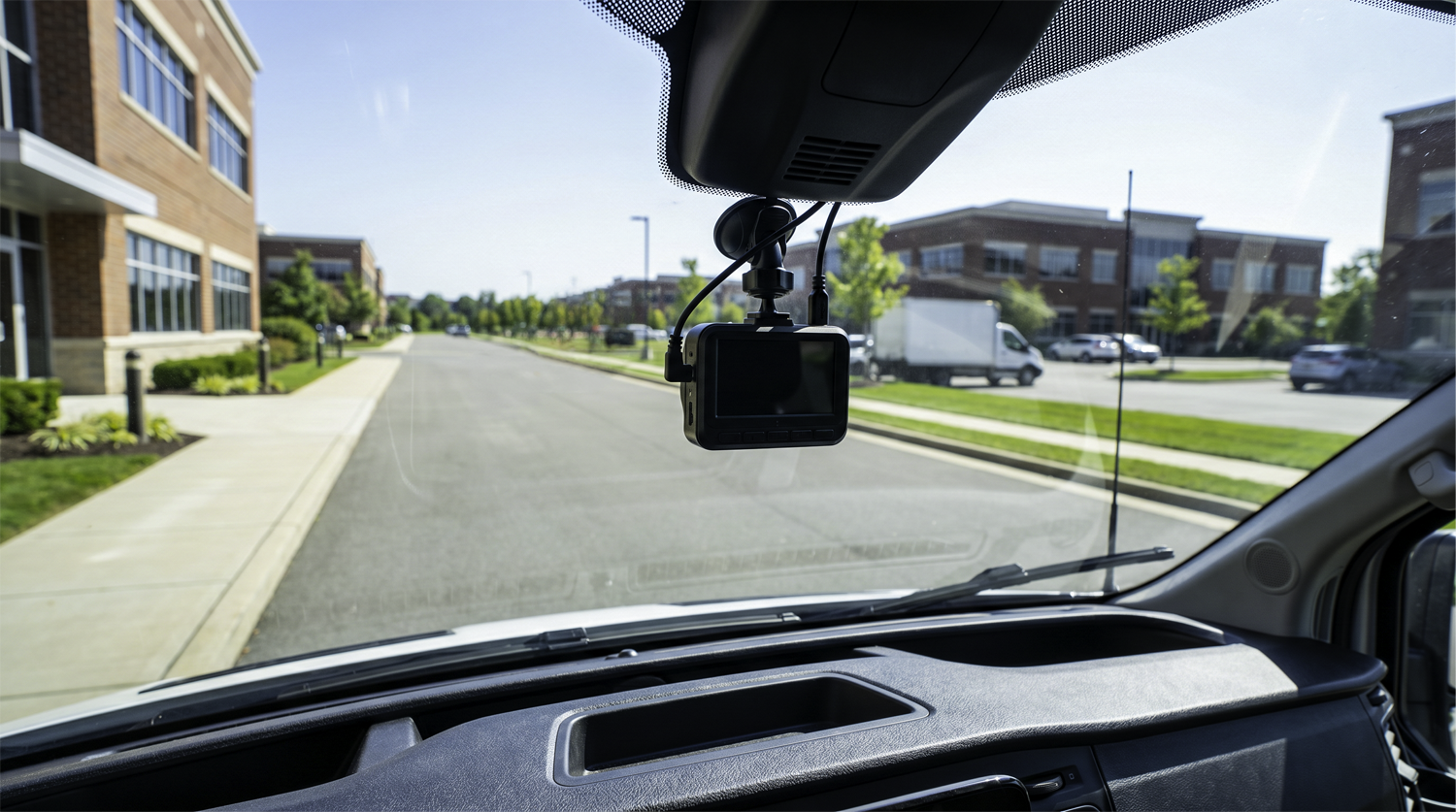
GPS-powered fleet tracking systems have helped document driver actions with greater accuracy. Dash cams for fleet safety take that capability further by adding a continuous visual record that can prove exactly what happened before, during, and after an incident. This is why fleet managers are increasingly investing in dash cams for fleet safety and why the results speak for themselves. Here’s how this video technology can slash your operational risk and improve driver behavior.
Why Fleet Safety and Liability Management Demands Better Tools
Businesses are looking for every technological advantage they can find because safety management has become a high-risk endeavor today. The most immediate pressure comes from the staggering rise in commercial insurance premiums businesses face.
The insurance industry reported a year-over-year increase in commercial premiums of 2.9% in the fourth quarter of 2025. While that figure sounds modest, it follows years of annual growth around 10% that began in 2020. Across most commercial sectors, insurance premiums are now 35% to 45% higher than pre-pandemic levels. For fleet operators, that increase represents a significant and ongoing cost that demands a strategic response.
Commercial Fleets Hit the Hardest in Insurance Spikes
While rates for all types of insurance (personal auto, homeowners, healthcare, etc.) have increased across the board since 2019, businesses have seen some of the highest spikes. Commercial fleets inherently carry high risk, and the lack of objective evidence in most accidents is a major contributing factor.
When a collision occurs between commercial and personal vehicles, the investigation often comes down to a "he said, she said" scenario. If the driver of a passenger vehicle claims your van ran a red light, and your tech insists the light was green, the commercial fleet often ends up footing the bill. In some cases, this is simply because the fleet is assumed to have deeper pockets and better insurance.
Faced with these pressures, fleet operators are actively looking for tools that reduce exposure, create defensible records, and demonstrate due diligence to insurers. Dash cams for fleet safety have emerged as one of the most direct and effective solutions available.
How Dash Cams for Fleet Safety Work in Daily Operations
As liability risks and safety pressures have intensified, fleet dash cams have moved from an optional add-on to an operational standard for commercial vehicle programs. This is due in part to their ability to provide an accurate and impartial record of events on the road. But when you look into how they actually work in daily operations, you’ll see they also bring efficiency to both daily fleet management and incident investigations.
Depending on the model and configuration, dash cams can provide either continuous fleet video monitoring or event-based capture. While continuous recording provides a complete historical record, event-based capture is a major time saver for fleet managers. Using internal sensors, the dash cam records only the events that matter, rather than endless hours of inconsequential footage.
So, when a driver is traveling down a suburban road and suddenly slams on the brakes, the system detects a harsh braking event and automatically saves a video clip of the ten seconds before and after. The fleet manager can then review the footage and confirm that a pedestrian stepped unexpectedly into the crosswalk. Rather than defaulting to an assumption of driver error, the manager has objective, time-stamped evidence that the driver responded correctly. That distinction matters in insurance investigations, legal proceedings, and internal safety reviews.
How Dash Cams Improve Driver Behavior Over Time
While installing cameras in your fleet may at first seem like surveillance, business owners often find that dash cams serve as proactive driver safety systems. That’s because drivers who know they are being monitored tend to behave better behind the wheel.
Since they know they are being observed, drivers become more aware of their surroundings. They eschew the usual distractions, such as looking at a phone or eating while driving. And if you do happen to catch unsafe driving, you can use this footage as an opportunity to coach. Instead of conducting generic, quarterly safety meetings, you can sit down with individual drivers and review actual clips of their driving.
When a driver reviews actual video of their own late braking or tailgating, the impact is more immediate than any data report. The result is behavior change grounded in personal accountability rather than abstract metrics. Over time, this coaching approach builds a measurable safety culture across the entire fleet.
How Dash Cams for Fleet Safety Reduce Liability and Protect Your Business
Dash cams serve as effective driver monitoring systems and provide invaluable evidence in incident investigations. The more important question for fleet operators is how these capabilities translate directly into reduced business liability.
Imagine that one of your plumbing vans is rear-ended by a distracted driver. The other driver tells the police that your van suddenly stopped in the middle of the road. Without video evidence, this could result in a lengthy dispute. With a dash cam, you simply hand the insurance company the footage proving your van was completely stationary. Fault is immediately established, and your company is fully protected.
While that scenario may seem far-fetched, commercial fleets are frequent targets of "crash for cash" scams, in which civilian drivers intentionally cause accidents involving branded vehicles to secure a payout. A dash cam stops these scams dead in their tracks, saving fleets from massive (and unearned) financial penalties.
Even when you’re dealing with normal accidents not motivated by fraud, video proof from dash cams helps protect your business. Insurance adjusters can process claims significantly faster, and often more favorably for the fleet, when they receive high-definition video of the incident rather than a stack of conflicting witness statements.
Where Dash Cams Deliver the Most Value for Fleets
More and more fleet managers are investing in dash cams and video technology because of the reduced liability and improved driver safety they bring. The following is an overview of the primary dash cam benefits fleet operators report most consistently:
- Accident documentation: Dash cams provide objective, time-stamped evidence that protects your company from false claims and unwarranted liability exposure.
- Driver coaching and training: Video helps transform abstract safety concepts into tangible, visual lessons tailored to each specific driver's habits.
- Insurance and compliance support: Cam evidence streamlines the claims process and may qualify your fleet for significant discounts on insurance premiums.
- Improving overall safety culture: Investing in cams sends a clear message from the top down that the company prioritizes the physical safety of its employees and the public above all else.
What to Look for in a Fleet Dash Cam System
Dash cams vary widely in price and capability. The goal is to select a system with the features your operation actually requires, without paying for functionality that adds complexity without adding value. These are the core features that separate high-performing fleet dash cam systems from those that fall short:
- Video quality: Blurry footage is useless, so look for cameras with at least HD (1080p) quality. The cam should also have low-light capabilities to ensure license plates and street signs are clearly visible regardless of the time of day.
- Event-based recording with alerts: You don’t need endless hours of road footage, so pick a system that can detect driving events like speeding, hard cornering, and harsh braking, and instantly alert you when they happen.
- Cloud storage: Older dash cams recorded directly to SD cards, which had limited storage and required physical access to review the footage. The best cams today can send clips straight to the cloud so that you can review them remotely on your desktop or mobile device.
- Simplicity: Avoid overly complex systems that require dedicated professionals to operate. Viewing video footage should be as simple as watching any online video.
How to Implement Dash Cams in Your Fleet (Step-by-Step)
Once you find the right fleet video monitoring system, you need an implementation plan. The following six-step process provides a structured approach to rolling out dash cams across your fleet.
- Identify safety and liability risks: Analyze your past accidents, insurance claims, and maintenance records to understand your specific vulnerabilities.
- Choose a pilot group of vehicles: Do not roll the system out to 100 vehicles on day one. Select three to five vehicles to test the hardware and understand the data workflow.
- Install and test cameras: Ensure the cameras are mounted securely and provide an unobstructed view of the road without blocking the driver’s line of sight.
- Train drivers on purpose and expectations: Drivers should understand that the cameras are there to protect them from false claims and improve safety. Set expectations on driving behaviors (following the speed limit, maintaining safe distances, etc.).
- Review footage and use for coaching: During regular safety meetings, share clips with a focus on positive reinforcement. Strive to coach drivers to improve rather than chastise them for mistakes.
- Scale across the fleet: Once the pilot is successful and the workflow is established, roll the cameras out to the rest of your operations.
These are the implementation mistakes that most commonly derail fleet dash cam programs.
- Not communicating with drivers: Dropping cameras into cabs without explanation breeds mistrust and resentment.
- Using footage only for punishment: If drivers only hear from you when they make a mistake, morale will plummet. Use the footage to highlight great defensive driving, too.
- Choosing overly complex systems: Systems bogged down with unnecessary features lead to administrative fatigue.
- Ignoring data after implementation: A camera only provides ROI if someone is actually reviewing the flagged events and acting on them.
How Bouncie Completes Your Fleet Safety and Dash Cam Strategy
Dash cams provide critical visual evidence, but they work best when connected to a platform that aggregates all of your fleet safety data in one place. Without that central layer, video footage, telematics data, and driving behavior reports remain disconnected, making it harder to act on what you know. The fleet management system that provides the most actionable data with the flexibility to integrate with other safety solutions is Bouncie.
While dash cams provide visual context to specific incidents, Bouncie continuously collects vital telemetry data, including the exact speed, location, and driving behavior for each vehicle in your fleet. So, in addition to HD video footage of consequential incidents, you gain world-class GPS tracking and vehicle diagnostic data that helps make your case.
Bouncie's open API makes it straightforward to connect the data it collects with other business applications, including the dash cam systems your fleet already uses or plans to adopt. Rather than managing separate tools that never communicate, fleet operators can build a unified safety and visibility platform around Bouncie.
Fleet Dash Cams FAQ
Here are answers to the most common questions fleet managers have about dash cams for fleet safety:
Do dash cams for fleet safety actually reduce accident rates?
Yes, research from the insurance industry consistently links dash cam adoption in commercial fleets to measurable reductions in accident frequency, liability payouts, and annual insurance premiums.
Are dash cams worth it for small fleets?
Yes, and they may be even more valuable for small to mid-size businesses that lack the resources to fight large commercial liability claims. A single fraudulent liability claim can bankrupt a small business, but a single dash cam can prevent it.
Dash Cams for Fleet Safety: Better Visibility, Better Decisions
Fleet dash cams provide an unassailable record of events. As businesses face unprecedented liability and safety pressure, this is more important than ever. Better visibility leads to better decisions, and better decisions lead to a safer, more profitable fleet. To get started, choose the right dash cam system, identify your main safety risks, and start a pilot program.
A comprehensive fleet management platform is equally essential for centralizing safety data and reducing liability over time. To learn more, check out Bouncie for Fleets.