Plumbing Fleet Tracking for Faster Dispatch and Accountable Service Calls
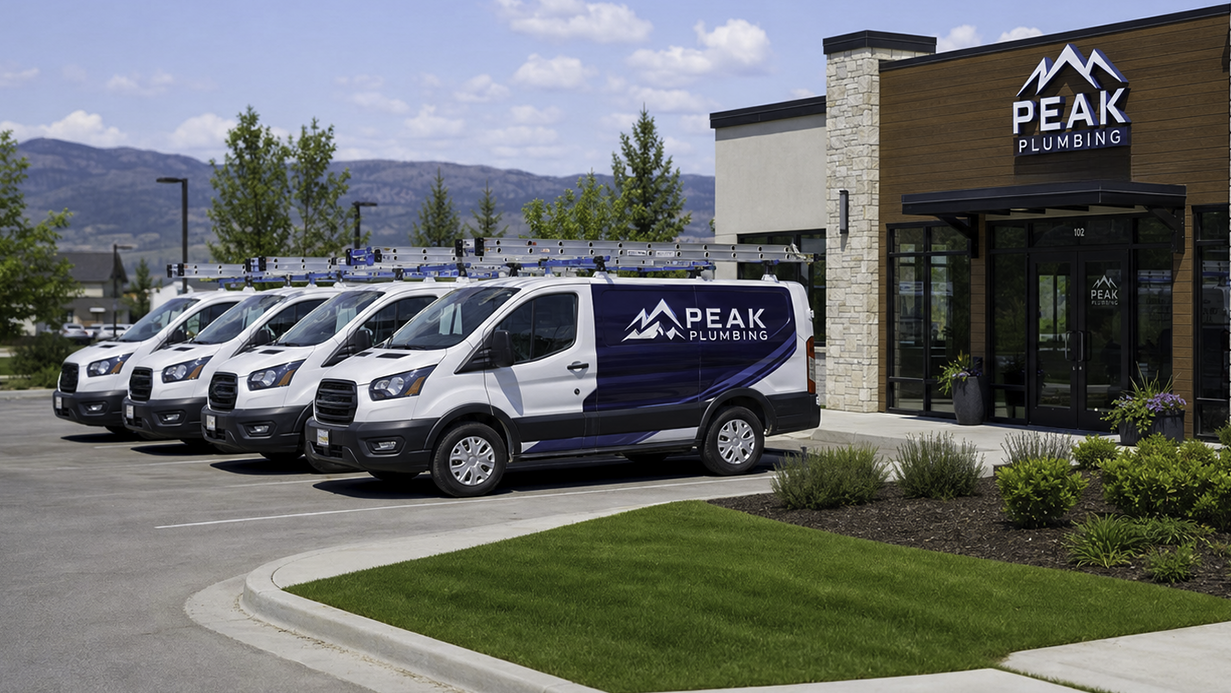
Emergency calls in plumbing never come at a good time, and the call about a flooded basement always seems to come in at the worst possible hour.
The dispatcher has to decide which van to send based on where they assume everyone currently is, which usually means a radio call or a group text asking the same question every time. Who is closest to the flooded basement? Plumbing fleet tracking uses a GPS device in each service van and software that shows every van’s live location on one map, so the dispatcher can compare each van’s location with the customer’s address and send the tech who can get there first.
Who Is Closest to the Flooded Basement?
Dispatching by guesswork isn't the dispatcher's fault. Plumbing makes dispatching harder than most other trades because jobs are unpredictable. You never know when they will come in or, more importantly, how long they will last.
Without a modern plumbing fleet tracking system to help monitor locations in real time, the dispatcher is at a disadvantage. They can typically build a fairly accurate schedule at the top of the day. By mid-morning the picture is less clear, and by afternoon the dispatcher is improvising. The result is often a missed arrival window on an emergency call, and that is exactly the kind of miss that turns into a negative review and costs the company future jobs.
A solution is within reach, with plumbing fleet tracking systems available for businesses of all sizes. This guide shows how GPS fleet tracking works in a plumbing operation, starting with why the schedule breaks, then the questions vehicle data can and cannot answer, and finally how to roll tracking out to your techs without a fight.
What a Plumbing Day Actually Looks Like, and Why the Schedule Breaks
A plumbing schedule breaks for two reasons that no amount of planning removes.
First, job durations are variable. A clogged drain and a complex repipe both occupy a single line on the schedule, and the time difference between them can easily delay every appointment scheduled after it. Second, emergencies don’t queue up like other jobs. They arrive unannounced, break the existing schedule, and force you to move techs around.
Other operational realities that make scheduling and job management harder include:
- On-call and after-hours work means service vans are frequently moving outside standard business hours, raising legitimate questions about what is reasonable to monitor and when.
- Take-home vans are entirely normal in this trade, and they are the single biggest reason a tracking rollout goes wrong when the system is handled as surveillance.
- Apprentice and journeyman pairings change constantly, so the person in each van can differ from day to day, and vehicle records are not personnel records.
- Arrival windows are the primary customer-facing promise the whole operation is judged on, and they are currently backed by nothing more than an estimate.
The Questions Vehicle Data Can Actually Answer
Variable job lengths, emergency callouts and take-home vans all leave the dispatcher scheduling from an incomplete picture. A plumbing fleet tracking system fills in that picture with vehicle data, so questions you used to guess at now have answers you can check.
Some of the questions that GPS tracking data answers include:
- Which van is genuinely closest right now? Live location turns the critical dispatch decision from a guess into a simple lookup, making this the highest-value capability for a plumbing operation.
- Which on-call tech can reach a 2 a.m. burst pipe first? After hours, on-call vans are usually parked at techs’ homes, and a location check at the moment of dispatch shows who is actually nearest. Checking only when a callout needs dispatching is also an after-hours policy most techs can accept.
- When did the van arrive and when did it leave? Arrival and departure times per address, pulled from trip history, are the metrics needed to substantiate billed time when a customer disputes an invoice.
- How much of the day is drive time? Reviewing trip histories will show whether your company's service area has grown too wide for your team's size.
- How often are we making supply-house runs, and from which jobs? Setting a Geo-Zone on the local supply house makes the invisible mid-job trip a counted one. For example, an owner who thought parts runs were only occasional might find they are happening several times a week from the same category of job. That turns a dispatch complaint into a stocking decision. If one type of job keeps sending techs to the supply house, those parts probably belong on the van.
- How long are vans sitting with the engine running? Idle time on a job site is normal, but 40 minutes in a parking lot is a problem that needs addressing.
- Is this van about to strand a tech mid-job? Engine diagnostics and diagnostic trouble code (DTC) alerts can catch many problems early, turning what would have been a breakdown and a lost day of scheduled work into a repair you book on your own terms.
- Are we driving the way our name on the door implies? Speed, hard braking, and rapid acceleration in a van with your company logo are all fleet safety risks. A plumbing fleet management system can notify you about these driving behaviors.
- What did each van actually cover this month? Mileage recorded per van lets you schedule fleet maintenance on miles actually driven rather than on the sticker in the windshield.
The Questions Plumbing Fleet Tracking Data Can’t Answer
At the same time, it’s important to understand the questions a plumbing GPS tracker and its data can’t answer. It can’t tell you what happened inside a customer’s house. It can’t indicate the quality of the work or whether the job was completed properly.
While GPS tracking for plumbing can document how long the tech was at the customer’s house or office, it can’t tell you how long the actual plumbing work took. Finally, remember it tracks your work van's location, not the tools or equipment inside it.
Rolling Out Plumbing GPS Tracking Without a Fight
For some techs, GPS tracking for plumbing vans brings up thoughts of surveillance. They may feel like you don’t trust them, or that dispatchers will now micromanage their time. For others, any change to the status quo is scary. Some get to drive their work vans home and worry you’ll track their personal activities. For all these reasons, a rollout succeeds only when your techs buy in.
Don’t be discouraged, because you can implement plumbing GPS tracking without a fight. Follow this checklist for a successful rollout:
- Decide what specific problems you want to solve before you install anything. From the questions vehicle data can answer, pick the one or two that matter most to your shop, and judge the rollout on whether the system answers them well.
- Tell the crew before the devices arrive, not after they inevitably notice them. Say explicitly what is being recorded, what it will be used for, and what it will not be used for.
- Put the after-hours tracking position in writing, since take-home vans make it the first question anyone asks. Decide whether you will look at non-work hours at all, and state that policy clearly.
- Install the devices. An OBD-II device simply plugs into the port, so a van is out of service for a minute instead of an afternoon in the shop.
- Set Geo-Zones for the places that matter to your operation, such as the main shop, the supply houses you actually use, and any recurring commercial accounts.
- Use the system only for dispatch for the first few weeks. Techs should notice it makes their day easier, which goes a long way toward getting them to accept the changes.
- Review the week's data with the crew, not about the crew. Drive time patterns and parts runs are operational findings, and treating them that way is what keeps the data trusted.
- Save customer-facing evidence and billing questions for last. That is where the data earns its keep, once nobody is nervous about it.
Points to Consider and Actions to Take
As you work through the checklist above, make these three calls for your own shop:
- Determine whether your primary problem is dispatch or accountability. Both are legitimate, but pick one to focus on first so you don’t overwhelm your crew.
- Identify whether you utilize take-home vans or shop-parked vehicles. This determines whether you need to answer the after-hours question before day one.
- Assess whether you need engine and maintenance data. On aging vans doing daily service work, a mechanical breakdown costs a full day of scheduled jobs, which is the real argument for active diagnostics.
Common Deployment Mistakes
As you proceed, make sure to avoid these common implementation mistakes:
- Installing the devices first and explaining them afterward. Techs who find a device before anyone mentions it assume the worst, and that trust is hard to win back.
- Treating idle time as waste without checking the job context. A van idling on site in July may simply be a tech running the air conditioning between brutal attic runs.
- Treating every notification as a rule violation. A sudden stop at a supply house usually indicates the job is going sideways, not the tech going off-task.
- Expecting a plumbing GPS tracker to measure the work. It measures the vehicle, so wrench time is still a conversation the tech must have.
- Expecting the platform to protect the tools. It does not track tools or equipment. If tool loss is a problem at your business, this is not the solution.
- Buying the system as theft insurance for the van. A plug-in tracker sits in a visible port and a thief can unplug it, so it should never be counted on to get a van back. What it does reliably is tell you when a van moves after hours or when the device is removed.
How Bouncie Fits a Plumbing Operation
Bouncie for fleets is a plumbing GPS tracker built to work the same in a three-van shop as in a twenty-van operation. The Bouncie device plugs directly into the OBD-II port, standard on gas vehicles since the 1996 model year and on diesels since 1997, so there is no wiring and no separate power source to manage. When a van goes into the shop, the device moves to the loaner or replacement van in seconds, which matters for a small fleet that cannot spare a van even for a day.
How Bouncie Answers the Dispatch Questions
Bouncie answers the closest-van question with live location for every van on one map, so dispatch becomes a lookup instead of a round of calls and texts, at 2 p.m. or 2 a.m. Its trip history records when each van arrived at and left every address, which is the evidence you need when a customer questions a bill.
Bouncie handles the supply-house question with Geo-Zone alerts. Set the shop and your local supply houses as Geo-Zones, and you get a notification on your phone whenever a service van arrives or leaves. To keep vans running, the Bouncie device monitors engine and battery health and sends alerts that explain, in plain English, the DTCs behind a Check Engine light.
Plumbing Fleet Tracking FAQ
Can plumbing fleet tracking keep track of the tools in my vans?
No. The Bouncie device tracks the vehicle it is plugged into and nothing else. It does not track tools, equipment, parts or inventory, and it cannot tell you what is in a van. If tool loss is your problem, you need a separate asset-tracking product.
Is it legal to track a take-home work van?
Tracking a company-owned van is broadly permitted, but rules on employee notice vary by state, and after-hours tracking is where most disputes start. The guide to tracking company vehicles covers what to put in writing before you install anything.
Does it show which tech was driving?
It records the van, not the person. With apprentice and journeyman pairings changing day to day, match each van's trips against your dispatch schedule to see who was in it.
Can it stop a tech from speeding or keep a van off certain roads?
No. The Bouncie device reports what the van did, such as speed, hard braking and rapid acceleration, and sends alerts. It does not limit speed, restrict routes or shut a van down.
Does it work on larger vans and box trucks?
Most plumbing vans have a standard OBD-II port and get the full feature set. Heavier trucks with a 9-pin diagnostic connector work through an adapter, which covers location, trip history, Geo-Zones and idle time but may not return engine and battery data. If box trucks are becoming a bigger share of your fleet, the truck GPS tracker guide covers what changes once you are past standard vans.
Improve Dispatching and the Rest Will Fall Into Place
In a service business like plumbing, when you respond to a call is nearly as important as the quality of the work. No customer wants to hear that you have to track down the closest tech and get them there as soon as possible. They want a solid ETA that your team meets. But what can you do when every call leads to dispatchers asking the entire team, “Who is closest to this call?”
Dispatching plumbing vans by guesswork leaves customers waiting, and plumbing fleet tracking replaces the guess with a live answer. Start with dispatch, because it is the change techs feel as help rather than oversight. Once the closest-van question is a lookup and arrival and departure times are on record, arrival windows, billing disputes and supply-house runs all become things you can see and manage. To get started, learn more about Bouncie for fleets.