Fleet Maintenance: How to Build a Preventive Maintenance Program
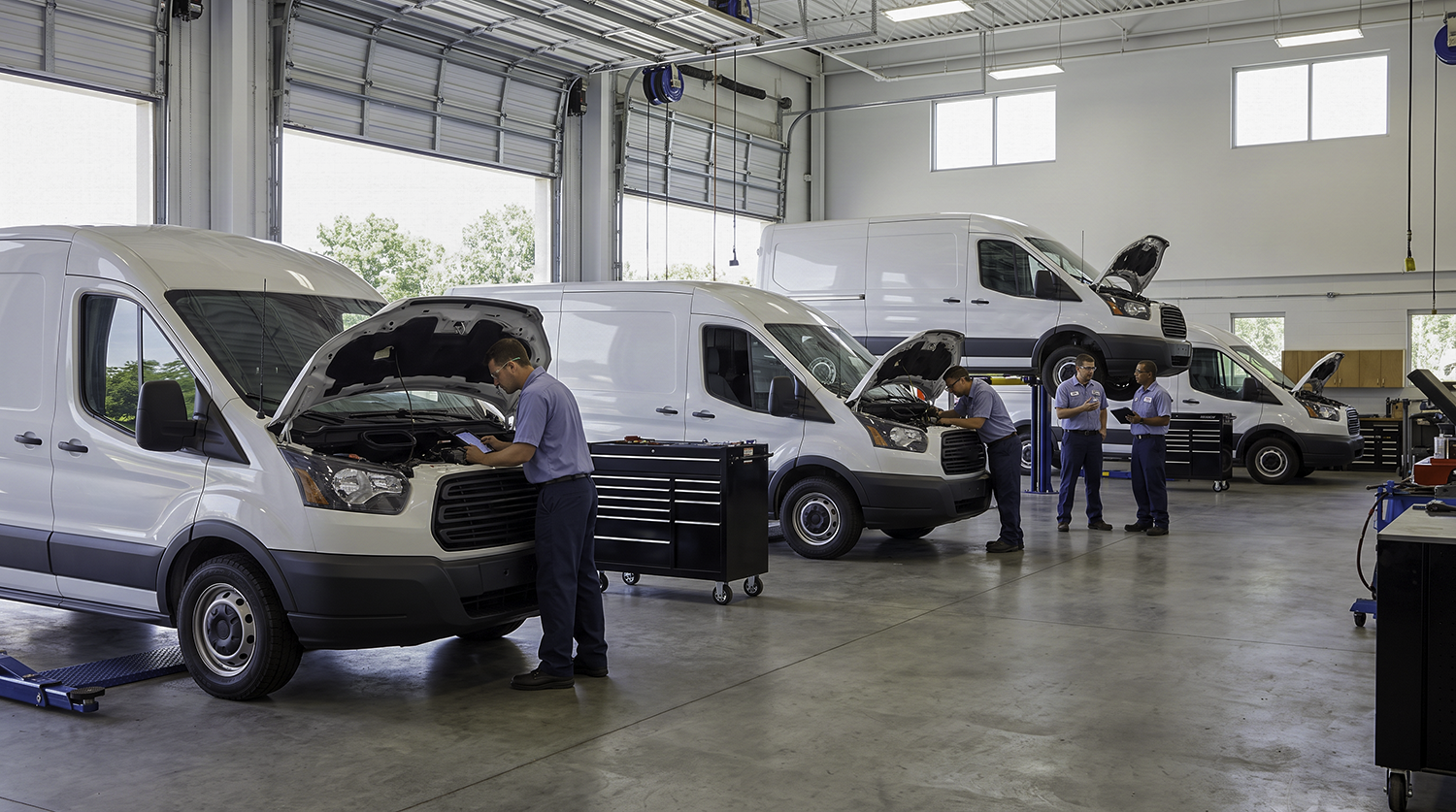
Fleet maintenance is the ongoing work of keeping every vehicle you operate serviced, inspected, and road-ready on a set schedule rather than in response to whatever fails next. For many small or mid-size operations, it gets treated instead as a series of isolated events. An oil change here, new tires there, and then repair of show-stopping breakdowns as they come up.
Business owners and experienced fleet managers know they would be better off with clear rules for when service happens and why. But they can’t shake the sense that reactive maintenance is cheaper. In the moment, it probably is. Over time, it costs more in extended downtime, emergency repair rates, and shortened vehicle lifespans.
This story might sound familiar. The drivers and fleet managers at a landscaping company ignore a persistent Check Engine light on one truck for weeks because “it’s still running fine.” Then, in the week leading up to Memorial Day, when there are a dozen yards to mow and an untold number of trees to trim, that truck fails. It ends up sitting at a shop for a week, costing the business far more in lost jobs and frustrated clients than the original minor repair would have.
Here’s the good news. A solid preventive maintenance program doesn’t require building up your service department or purchasing expensive software. All you really need are consistent triggers that tell you when a fleet vehicle needs early service, and a way to track them.
Ready to stop minor problems from turning into expensive ones? Here’s how to build a structured preventive maintenance program using the data your fleet vehicles already generate.
The True Cost of Reactive Maintenance
The first step in building a preventive maintenance program for your fleet costs nothing. It only requires a mindset shift.
You have to stop thinking that reactive maintenance is more cost-effective than preventive maintenance. Reactive maintenance means a vehicle goes into the shop once something has already broken. Preventive maintenance means it goes in on a defined schedule and on early warning signs, before a failure. Predictive maintenance goes one step further and uses patterns in the vehicle’s own data to estimate when a specific component will need attention.
“If it ain’t broke, don’t fix it” is sound wisdom in plenty of situations. Fleet management is not one of them, and the bill arrives as lost time, higher repair costs, and unhappy customers.
Here are the reasons why the true cost of reactive maintenance is far greater than what’s listed on the repair bills:
- Unplanned downtime: A vehicle being out of service costs more than the repair itself when you factor in lost jobs, rerouted drivers, and the expense of rental vehicles.
- Escalated repairs: Small issues grow into major failures when nobody addresses them, and by the time anyone does, the repair bill has multiplied.
- Asset depreciation: Deferred service shortens a vehicle’s working life, and it cuts resale value even when the vehicle keeps running.
- Increased liability: Vehicles not serviced on a proper schedule are inherently less safe. This leads to more accidents and insurance claims, increasing your premium costs.
The pattern behind all four is the same. Reactive maintenance does not reduce your costs, it relocates them, moving spend off the repair invoice you look at and onto the lost jobs, idle drivers, and shortened vehicle lifespans you probably do not track. That is precisely why it feels cheaper than it is.
These four are only the most visible costs. To dig further into the true cost of reactive maintenance, check out our earlier article, Improve Fleet Efficiency by Fixing Four Hidden Cost Leaks.
What a Fleet Maintenance Program Actually Includes
Beyond the expected cost, another reason small and mid-size business owners put off implementing preventive maintenance programs is that they’re not sure if they have the resources to do it. Maintenance is one piece of a larger operation, so it helps to know what to look for in a fleet management system before you build the maintenance layer on top of it. You may feel like you don’t have enough maintenance staff, or the right staff members. But in reality, there are only five core elements, and you likely have at least one in place already.
The five things a fleet maintenance program includes are:
- OEM-recommended service intervals: For each vehicle, follow the manufacturer’s recommendations on how often to change oil, filters, fluids, tires, and brakes. (This is the one element you likely already have in place.) Set these intervals as the standard baseline for service.
- Condition-based triggers: Check Engine lights and diagnostic trouble codes (DTCs) generated by the vehicle’s onboard computer should trigger service before the baseline does. Don’t wait until the regular service interval or until something fails.
- Seasonal and usage-based checks: You know your business and the wear it places on your vehicles at different times of the year. Use this knowledge to implement situational service. For example, you might conduct pre-winter inspections and adjust service cadences for high-mileage drivers versus low-mileage drivers. For vehicles that idle for long stretches on a job site, engine hours track real wear far better than the odometer does, because a van parked and running all afternoon adds hours without adding a mile.
- A record-keeping system: An electronic logging system is great, but having any kind of centralized log, even a simple one, matters more than having none at all. Don’t let service history become tribal knowledge held by one manager or driver. You can also use the log data to discover trends and adjust service schedules based on your fleet’s history.
- Driver inspections: Your drivers see these vehicles every day, so give them a short walk-around to run before the first job. Tires, lights, fluid levels, leaks underneath, and anything new on the dash. A two-minute check catches what no odometer reading or diagnostic code will ever surface, such as a slow tire leak, a cracked belt, or uneven tread wear.
Setting the Right Fleet Maintenance Triggers
A maintenance trigger is any condition that sends a vehicle in for service. Strong programs run three types at once. Condition-based triggers come from the vehicle itself, and a diagnostic trouble code or warning light should always override whatever the schedule said. Mileage and time triggers then catch everything the vehicle has no way to report.
Mileage-based triggers are the most common across fleets of every size, and you know them by heart. Change the oil at the interval in the manual, which on most modern fleet vehicles runs closer to 5,000 or 8,000 miles than the old 3,000-mile rule, and replace the cabin air filter around every 15,000 miles. While they shouldn’t be the only trigger, they are important, especially for high-usage vehicles that rack up miles quickly on daily routes.
Time-based triggers matter more for low-mileage vehicles that might slip through the cracks of other maintenance schedules. In particular, fleet vehicles that sit in the parking lot more than others should get fluid and seal checks every six months, regardless of what the odometer reads.
Here is how those trigger types line up against the services most fleets actually schedule. Treat this as a starting framework and let each vehicle's owner's manual override any row, since intervals vary by make, engine, and duty cycle.
The engine-hour column matters most for vehicles that spend hours running while parked. As a rough field conversion, one hour of idling puts roughly the same wear on an engine as 30 miles of driving, so a van that idles four hours a day is aging like it drives an extra 120 miles.
For guidance on choosing a tracking system that supports your set of triggers, check out our article Fleet Tracking System Features and How to Choose.
How Fleet Data Turns Maintenance From Guesswork Into a System
Every vehicle in your fleet already generates the data a maintenance program runs on. Mileage, engine hours, and diagnostic trouble codes are all sitting on the onboard computer whether anyone reads them or not. Once you can collect that data automatically, most of your maintenance scheduling stops being a manual task, because the triggers you defined start firing on their own.
The gateway to this data is the OBD-II port, standard on gas vehicles built since 1996 and on light-duty diesels since 2008. Heavier commercial trucks use a different diagnostic connector, so confirm what your specific vehicles have before you choose hardware. Standalone OBD readers pair with a smartphone app to let you view the wealth of information coming from the onboard computer, but it’s more common for fleet managers to deploy GPS trackers for this purpose. With an OBD GPS tracker, you not only get access to fleet data, but you can also use real-time location tracking to improve dispatching and optimize driver routes for service-based businesses.
However you acquire your fleet data, here’s how it can turn maintenance from a game of reactive guesswork into a full-fledged preventive maintenance system:
- Automatic mileage logging: Tracking vehicle mileage is critical in a preventive maintenance program. When you pull mileage data directly from the onboard computer, it removes a time-consuming manual step.
- Real-time DTC alerts: Rather than depending on your drivers to report a new light or message on their truck’s dashboard, or waiting for your maintenance staff to discover DTCs, you can receive notifications the instant the onboard computer generates them. Real-time alerts help you flag problems immediately, before they cause a breakdown.
- Centralized data: By collecting telemetry data in one place, you can oversee maintenance status across an entire fleet instead of chasing down individual vehicles in the yard.
- Triage by severity: With codes and mileage visible across every vehicle at once, you can service the van throwing a misfire code this week and let the one approaching a routine oil change wait until next week. Without that view, both wait until something forces the issue.
What This Looks Like in Practice
Picture your current process when a vehicle in your fleet turns on its Check Engine light. The driver may tell you about it within a couple of days, or maybe later. Then you have to find time to bring it into the shop, hook it up to your equipment, and determine what the DTC means.
Now picture the same van with automatic data collection in place. A misfire code registers on Tuesday morning and you see it Tuesday morning, days before the van would have stalled mid-route. You book the repair for Thursday afternoon, when that van has nothing scheduled, and the customer never learns there was a problem. Same fault, same repair, same cost. The only variable that changed was how early you found out.
How to Build Your Preventive Maintenance Program
Building a fleet maintenance program takes six steps, and none of them requires new staff or new software to start.
Step 1. List all OEM service intervals. Open the owner’s manuals or hop online and pull the manufacturer-recommended maintenance schedules for every vehicle in your fleet. This will act as the baseline service schedule. A good preventive maintenance program will never push service past the baseline, but it will pull vehicles in early to nip issues in the bud.
Step 2. Set custom triggers. With your standard mileage and time-based schedules in hand, establish the conditions that matter most for your business. These include condition-based triggers, such as a Check Engine light or any other DTC the onboard computer reports. Seasonal and usage-based triggers will be the ones most specific to your business. Tap into your knowledge and experience to set the conditions that call for bringing vans and trucks into the shop.
Step 3. Turn on real-time alerts. If you have an electronic fleet management system, configure the notification settings with preventive maintenance in mind. For example, you should set instant notifications for DTCs and engine health alerts. This is the best way to catch potential show-stopping issues while they’re still small.
Step 4. Assign an owner. Assign one person to review alerts and schedule preventive service, even if it’s only a part-time responsibility. Maintenance programs often fail because no one has been clearly designated for this role.
Step 5. Centralize service logs. Log every service event in one place. Dedicated fleet maintenance software makes this easier, but a shared spreadsheet can work too.
Step 6. Review the program quarterly. Transitioning from a reactive approach to preventive maintenance rarely follows a straight line. Set up quarterly review meetings with your team and track three numbers, which are the percentage of scheduled services completed on time, total days of unplanned downtime, and maintenance cost per mile for each vehicle. Those three tell you whether the program is working and which vehicle is quietly costing you the most.
How Bouncie Supports a Preventive Maintenance Program
While you can manage preventive maintenance with the tools you have, it’s hard to beat the automation an electronic system offers. Rather than relying on shared spreadsheets or searching for “fleet maintenance near me” in hopes of finding the right software, check out the Bouncie fleet management platform.
Bouncie pairs an OBD-II GPS tracker with a smartphone app built for preventive maintenance, including automatic mileage and engine-hour logging for every vehicle. Bouncie also delivers DTC alerts in real time, so developing issues surface well before they become roadside breakdowns. You get plain-language explanations of what the Check Engine light actually means, so that you can react right away. (Take a look at our article Understanding Diagnostic Trouble Codes for more on how Bouncie keeps you informed and vehicles on the road.)
If you already have fleet maintenance software, Bouncie's Fleetio integration automatically syncs odometer and diagnostic data, saving your team the hassle of manual entry. The Bouncie app also provides a centralized place for fleet data that you can share with your entire team. To see how Bouncie Care handles service scheduling and record keeping, read our guide, How to Use Bouncie Care for Vehicle Maintenance.
Fleet Maintenance Is Possible for Every Size of Fleet
Fleet maintenance becomes a program, rather than a running series of emergencies, the moment three things are true. Every vehicle has a defined service baseline, every warning sign has a defined response, and one person owns both. None of that requires more staff or expensive software. It requires deciding in advance what sends a vehicle in for service, and then honoring that decision when the week gets busy.
Pick a single vehicle from your fleet and audit its maintenance history against the triggers outlined here. One vehicle is enough to show you where the program would have caught something first. To see how an electronic system can help build your preventive program, learn more about Bouncie for Fleets.