
The Future of Connected Cars: How Consumer Demand Is Reshaping the Industry
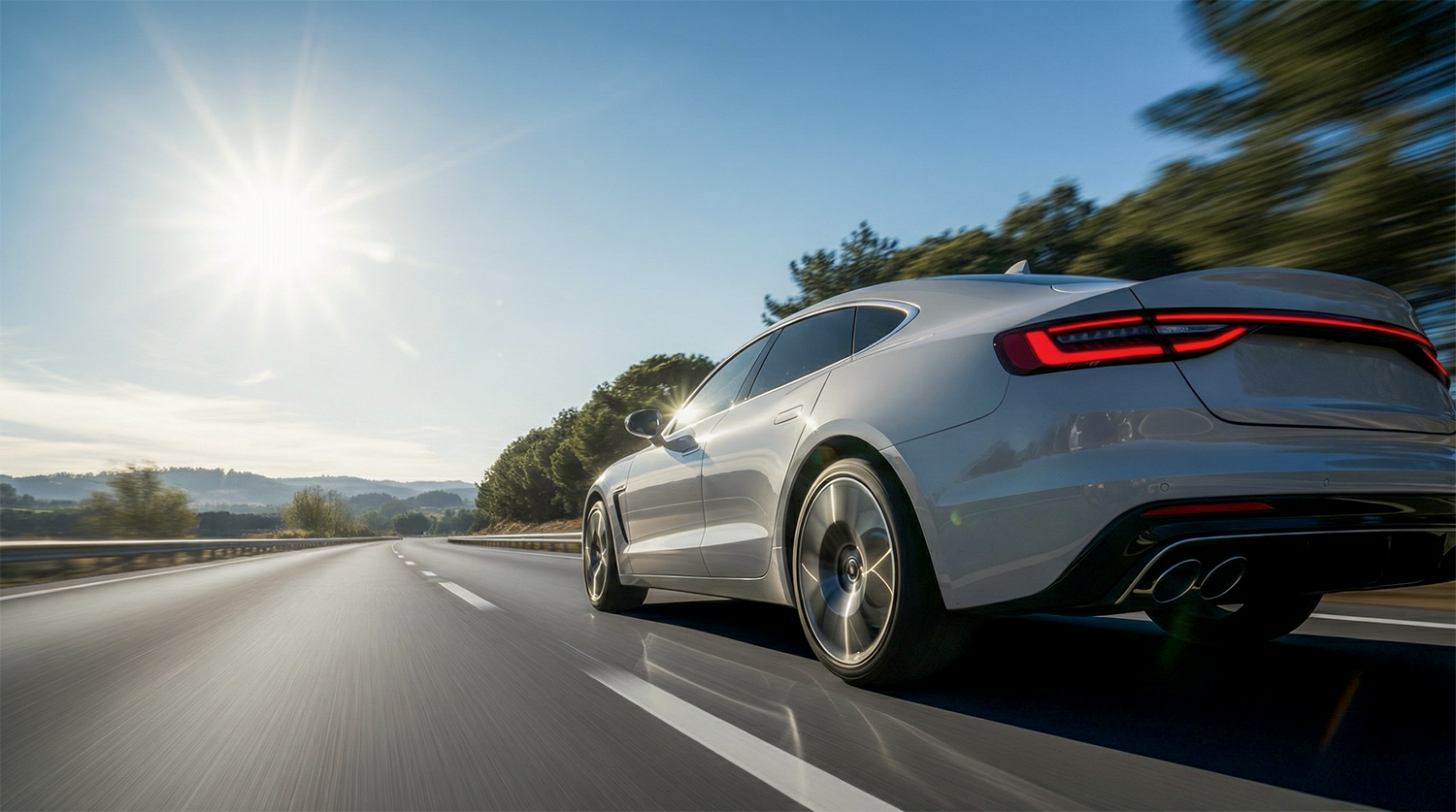
The future of connected cars is being shaped not by automakers but by consumers. Where drivers once prioritized horsepower and handling, today's buyers treat software capabilities and real-time data access as baseline expectations, not premium upgrades.
This shift in market preferences didn’t happen overnight. A 2017 Autotrader study (Autotrader, 2017 Car Tech Impact Study) was among the first to document the importance of software and connectivity, finding that nearly half of consumers (48 percent) prioritize in-vehicle technology over traditional automotive specs. By 2023, McKinsey (McKinsey, 2023 Mobility Consumer Pulse Survey) found that roughly the same percentage of consumers wouldn’t even consider buying a new car that lacked Apple CarPlay or Android Auto.
Looking ahead, it is clear that consumers want their cars to behave like the connected devices they use every day. It makes sense. A driver accustomed to the frictionless experience of the best smartphone apps expects the same level of intuitive insight from their car. When confronted with an outdated infotainment system or disconnected driving experience, the frustration is immediate.
Automotive OEMs, platform developers, and mobility providers must now deliver the real-time data, deep integrations, and intuitive over-the-air (OTA) update experience that today's consumers demand. This article examines how that shift happened, what it means for product and platform strategy, and how companies across the connected vehicle ecosystem can align their roadmaps with where consumer expectations are headed next.
Key Takeaways
- Consumer expectations, not OEM hardware cycles, now define the connected car product roadmap
- Real-time vehicle data is the foundational layer for every high-value connected car use case
- Legacy platforms are losing ground due to app fragmentation, limited data access, and slow update cycles
- Software-defined vehicles, OTA infrastructure, 5G, and AI are the four technologies shaping the next phase of connected car development
- Data privacy and transparent consent policies are a baseline trust requirement, not a differentiator
- Companies that align platform strategy with consumer expectations now will hold a structural advantage as the market matures
How Consumer Expectations Are Rewriting the Connected Car Product Roadmap
No player in the automotive sector has felt this shift more acutely than OEMs. For decades, product innovation was defined by hardware planning cycles that stretched years into the future. That model has broken down. Consumers increasingly view hardware as interchangeable. What drives purchase decisions today is software quality and user experience (UX), not engine specifications.
To understand why things have changed so much, you only need to look at the typical smartphone app UX. At home and in their work lives, consumers enjoy seamless digital ecosystems that guide their daily routines, help them control their homes, and enable flexible work arrangements. So, it’s no wonder that they no longer want a car that exists in a silo.
Instead, today’s car buyer expects real-time notifications on their phones when, for example, a car door is left unlocked or battery voltage drops. Remote vehicle access is no longer a futuristic concept. It is now a natural extension of an already highly integrated digital lifestyle. The result is a fundamental reordering of priorities. OEM software strategy is now the primary competitive battleground, and hardware has become the commodity layer beneath it.
Connected Car Features Consumers Now Consider Standard
Regardless of how individual OEM software strategies differ, the market has converged on a clear baseline. These are the connected car features today's drivers expect as standard, not optional:
- A full-featured mobile app
- Remote control features through the app (e.g., remote start, climate control)
- Push notifications from the app for critical events and predictive maintenance alerts
- Alerts for vehicle fuel levels, tire pressure, and other operational data
- Transparent usage and performance data
This distinction matters for product strategy. Features that were luxury differentiators a decade ago are now table stakes. Any connected car platform that does not deliver them is not competing for premium positioning. It is failing to meet minimum market expectations.
Why Legacy Connected Car Platforms Are Losing Ground
Not all connected vehicle technology meets this baseline of modern consumer expectations. In particular, platforms built by legacy automakers can suffer from a fragmented user experience. It‘s not uncommon to need one app for remote start, another for vehicle tracking, and a third for scheduling maintenance.
A more significant issue is limited access to real-time data. Whether the cause is poor design or an effort to minimize cellular data usage, the result is the same: a degraded user experience that undermines the platform's core value proposition. Another common issue is slow software update cycles, which leave UX bugs, security threats, and outdated functionality in place.
Finally, there is the problem of walled-garden platforms, or those that fail to integrate with a driver’s preferred navigation, music, or smart-home ecosystem. This lack of integration significantly hampers the consumer experience, leading to dissatisfaction with the automobile as a whole.
Real-Time Vehicle Data Is Becoming The Foundation of Modern Connected Car Platforms
As automakers and OEMs consider the future of connected cars and their strategies, one thing rises to the top. Real-time data. In the optimal modern vehicle ecosystem, continuous real-time data streams provide the foundation for all other services and deliver the operational insights today’s consumers want.
Plus, real-time data enables adjacent industries to leverage connected vehicle technology. For instance, usage-based insurance telematics relies entirely on granular, real-time driving behavior data to assess risk accurately and reward safe driving. For fleet managers, real-time insights mean the difference between optimized routing and costly downtime.
It’s important, however, to keep these and other real-world use cases in mind. Real-time data is indeed the foundational infrastructure for a telematics future, but without concrete applications, it’s simply a continuous stream of information.
The Business Implications for OEMs, Mobility Platforms, and Insurtech
Fortunately, all parties in the connected vehicle ecosystem continue to develop innovative, consumer-focused ways to leverage real-time data. This shift is already reshaping revenue models across the industry. One-time hardware sales are giving way to subscription-based offerings, with many OEMs now monetizing enhanced driver-assist capabilities and premium connectivity packages on an ongoing basis.
For mobility platforms, OEMs, and insurtech companies to succeed in this ecosystem going forward, they must continue to build products and services anchored around real-time data. They must also demonstrate that they have internalized the lessons of products that failed. Most fell short not because the technology was wrong, but because the experience was fragmented, the data was opaque, or the platform was closed.
Consider how consumers have repeatedly shown that they take data transparency and control seriously. This is an audience that has been educated about the value of their data through their smartphone usage and participation in social media.
Today’s buyers know what a walled garden is, and they will avoid the products that lack interoperability. Automakers, OEMs, and others in the ecosystem must form the strategic partnerships necessary to deliver the comprehensive experiences consumers demand.
Emerging Technologies Defining the Next Generation of Connected Cars
Several specific technologies are moving from concept to deployment and will materially shape connected car capabilities over the next five to ten years. Companies building product and platform strategies today need to account for each of them.
Software-Defined Vehicles (SDVs)
The software-defined vehicle represents the most significant architectural shift in automotive history. Rather than relying on fixed hardware configurations, SDVs decouple vehicle functionality from the underlying hardware, allowing capabilities to be added, updated, or modified entirely through software. For OEMs and platform developers, this means the vehicle becomes a continuously updatable product rather than a one-time hardware sale. It also means that competitive differentiation will increasingly live in software quality, update frequency, and ecosystem depth.
Over-the-Air (OTA) Update Infrastructure
OTA updates are the operational backbone of the software-defined vehicle. Consumers already expect their phones and laptops to update silently and seamlessly. The same expectation is now being applied to vehicles. Beyond convenience, OTA infrastructure has direct implications for safety recall response times, cybersecurity patch cycles, and the ability to deploy new features without requiring a dealer visit. Platforms that cannot support robust OTA delivery will face a growing gap between consumer expectations and actual product experience.
5G Connectivity
5G networks are expanding the data bandwidth available to connected vehicles, enabling lower-latency communication, higher-frequency telemetry, and more reliable real-time data streams in dense urban environments. For fleet operators, this means more granular operational visibility. For insurtech platforms, it enables finer-grained usage-based insurance models. For autonomous and semi-autonomous systems, 5G is foundational infrastructure for vehicle-to-everything (V2X) communication networks.
AI and Predictive Vehicle Intelligence
Artificial intelligence is moving connected car data from reactive reporting to predictive action. Rather than alerting a driver after a problem occurs, AI-powered systems can identify patterns in vehicle health data that indicate a failure is likely before it happens. This has direct applications in predictive maintenance, dynamic insurance pricing, fleet optimization, and driver behavior coaching. For platform developers, AI integration is becoming a core differentiability factor rather than a future roadmap item.
Taken together, these technologies signal a connected vehicle ecosystem that is converging around software, data, and intelligence as its primary value drivers. Companies that treat these as distant roadmap items risk being outpaced by competitors that are already building on them today.
The Overlooked Constraint: Data Privacy, Consent, and Trust
Other issues important to today’s consumer are data privacy, consent, and trust. While cybersecurity may be a 21st-century concern, these issues are on the minds not only of younger, more tech-inclined generations but also of the market as a whole. A Deloitte Connected Consumer Survey found that concern over personal data use spans all age groups, not just younger, tech-native consumers. Trust is a universal requirement, not a generational one.
However, automakers and OEMs often underrate just how important trust is. Consumers want to know how their data is tracked and stored. This is true even with their automobiles, even though this sector has historically not had to deal with user consent and trust.
So, when users opt out of data sharing, it’s not because they don’t want the connected features. Instead, they’re reacting to a lack of clarity about how their personal information will be used. Even if consumers don’t express these concerns directly, increasing regulatory pressure from the government and standards bodies makes data an issue that can no longer be overlooked. Today’s connected vehicle systems must therefore be rooted in strong and transparent data policies.
How to Align Connected Car Strategy With Consumer Expectations
Translating these insights into a highly effective strategy requires a clear framework for action. Companies looking to align their product roadmaps with consumer demand should follow this step-by-step approach:
Audit existing connectivity from the consumer's perspective. A candid assessment of your current ecosystem will surface where technical fragmentation creates user friction and where data latency undermines the experience your platform promises.
Identify constraints around real-time data access. Pinpoint architectural bottlenecks and walled-garden dependencies, then prioritize systems that produce continuous, actionable mobility data rather than periodic or siloed reports.
Prioritize the user experience over feature volume. Focus on delivering a small set of well-executed, frictionless capabilities rather than a broad suite of disconnected tools.
At the same time, develop scalable, interoperable data platforms. Ensure your foundational infrastructure can handle the high-volume data streams required for real-time access. The upfront investment fosters lasting competitive value.
Finally, adopt iterative cycles for continuous refinement. Traditional hardware rollout timelines feel unacceptably slow to users accustomed to seamless software updates. Prioritize rapid, feedback-driven iteration over fixed release schedules.
Implementation Guidance
When allocating resources, prioritize real-time capabilities first. Real-time data accuracy is the technical foundation on which every other consumer-facing feature depends. Mistakes to avoid include:
- Overbuilding features that have no proven user demand.
- Ignoring UX in favor of deep but inaccessible technical capability.
- Underestimating the immense technical complexity of third-party integration.
Ultimately, a good implementation is user-centric, utilizing an iterative rollout that responds to driver behavior. A poor implementation delivers a feature-heavy but deeply disconnected system.
Where Bouncie Fits Into the Connected Car Ecosystem
Meeting modern consumer expectations for connected vehicle capabilities does not always require purchasing a new vehicle. For OEMs, mobility providers, insurtech companies, fleet managers, and even connected car startups, Bouncie provides an affordable and scalable entry point into the connected car ecosystem.
Bouncie is a compact, affordable, and scalable GPS device perfect for providing the connected features consumers value most: real-time vehicle data built on a foundation of data privacy, trust, and simplicity.
Installation requires only plugging the device into the vehicle's OBD-II port, a universally supported standard in modern vehicles. After installing the companion app, Bouncie delivers the real-time insights today's consumers demand, all without complex OEM-level integration. Since it is an OBD-II device, it has access to vehicle health information and can alert consumers to issues like a low battery charge or a potential engine problem.
Bouncie solves the fragmentation and latency issues that hold legacy systems back. Its value scales across every segment of the connected vehicle ecosystem.
For fleet managers and commercial operators, Bouncie provides instant, fleet-wide GPS tracking and vehicle health monitoring without waiting for OEM integration timelines. Real-time location data, driving behavior insights, and health alerts translate directly into lower operating costs and faster response to vehicle issues.
For insurtech and usage-based insurance platforms, Bouncie delivers the granular, real-time driving behavior data needed to build accurate risk models and reward safe driving, without requiring custom telematics hardware or complex carrier agreements.
For OEMs, mobility providers, and connected car startups, Bouncie offers a proven, scalable data layer that can accelerate time to market for connected features without the overhead of building proprietary telematics infrastructure from the ground up.
In each case, Bouncie provides what the connected car ecosystem demands most: reliable real-time data, transparent data practices, and a platform that integrates rather than isolates.
FAQs About the Future of Connected Cars
Connected car trends continue to evolve rapidly, so it’s natural to have questions about where they are headed. Here are answers to popular questions about the future of connected cars.
What is a connected car and what features does it include?
A connected car today is more than a vehicle with an internet connection. It is a networked node that continuously shares and receives real-time data about its location, mechanical health, and operating environment. It integrates with the driver's broader digital ecosystem, including smart home devices, mobile apps, and third-party platforms, and supports over-the-air updates that keep its software current without requiring a dealer visit.
How will AI and real-time data change connected car capabilities?
Reporting and real-time notifications are the main products of connected car data today. As AI systems make their way into the automotive space, data will also be used for predictive purposes. This means data will power predictive maintenance and enable dynamic usage-based insurance models. It will even optimize citywide traffic management through V2X (vehicle-to-everything) communication, and facilitate fully autonomous driving networks.
What role do third-party platforms play in connected vehicles?
Third-party platforms help ensure OEM systems don’t become walled gardens. They provide interoperability by connecting vehicle data to smart home devices, independent fleet management software, and external insurance platforms.
Will consumers share vehicle data, and under what conditions?
Yes, but willingness to share data depends entirely on perceived value and trust. Consumers are more likely to share vehicle data when they understand exactly what is being collected, how it will be used, and what they receive in return. Tangible benefits such as lower insurance premiums, predictive maintenance alerts, or improved safety features are the most effective trust anchors. Vague or unclear data policies consistently drive opt-out behavior, even among consumers who want the connected features those policies are tied to.
From Feature Innovation to Expectation-Driven Design
The future of connected cars will be defined by consumers, not manufacturers. The product roadmaps that win will be built around real-time data, seamless integrations, and iterative software experiences. These are the same expectations drivers already hold for every other connected device in their lives.
These expectations will only continue to rise, and the products that win will be built on real-time data, open integrations, and software experiences that evolve alongside consumer behavior. Regardless of where your company sits in the connected vehicle ecosystem, the time to align your strategy is now.
Bouncie provides a cost-effective and scalable way to meet customer expectations for real-time data and seamless integration. Learn more about Bouncie today.