Bouncie and Fleetio Integration: Connecting Real-Time Vehicle Data to Smarter Fleet Maintenance

For many fleets using platforms like Fleetio, data is not the problem. The challenge is connecting that data across systems so it can be used quickly. That is exactly what the Bouncie and Fleetio integration is designed to solve.
Telematics platforms capture real-time vehicle activity. Maintenance systems track service schedules, inspections, and repairs. Both are essential, but they often operate in parallel rather than together. That separation creates friction. Data has to be manually transferred, updated, or interpreted before it becomes useful.
Over time, those small gaps add up. A missed odometer update can delay a service interval. A diagnostic alert might sit unnoticed until it becomes a larger issue. Maintenance teams end up reacting to problems rather than preventing them.
The Bouncie and Fleetio integration closes that gap. By connecting real-time vehicle data directly to fleet maintenance workflows, it gives maintenance teams a single, continuously updated view of vehicle health and activity.
Why Disconnected Telematics and Maintenance Systems Create Fleet Problems
When telematics data and maintenance systems are not connected, fleet operations rely on manual processes to fill the gap. That creates inefficiencies that are easy to overlook in the short term but consistently costly over time.
Take something as simple as mileage tracking. Many maintenance schedules depend on accurate odometer readings. Without an automated connection, those readings must be entered manually or updated periodically. If that update is delayed or missed, scheduled maintenance can fall behind.
Multiply that across an entire fleet and the inefficiencies compound quickly.
A vehicle might exceed its service threshold without anyone realizing it in time. A technician may discover an issue during inspection that could have been identified earlier through diagnostic data. Small delays turn into reactive maintenance, unexpected downtime, and higher costs.
Diagnostic trouble codes present a similar challenge. Without integration, those alerts may live inside a telematics platform without being tied to maintenance workflows. That means someone has to notice the alert, interpret it, and then manually create a task or issue in another system. In practice, that rarely happens as quickly as it should.
The result is a gap between what vehicles are experiencing in real time and how maintenance teams respond. Without a connected system, fleets are left working from incomplete or outdated information, which makes proactive maintenance difficult to sustain.
How the Bouncie and Fleetio Telematics Integrations Works
The Bouncie and Fleetio integration brings these two systems together by connecting real-time telematics data with Fleetio’s maintenance platform.
Once connected, vehicle activity and health data from Bouncie flows directly into Fleetio. There is no need to manually transfer information or reconcile data between systems. Updates happen automatically as vehicles are driven and events occur. This includes real-time data from Bouncie devices and initial syncing when vehicles are linked individually or in bulk.
This changes how data functions in daily operations. Instead of something that needs to be gathered and manually entered, vehicle data becomes a continuous input that automatically updates records and informs maintenance decisions.
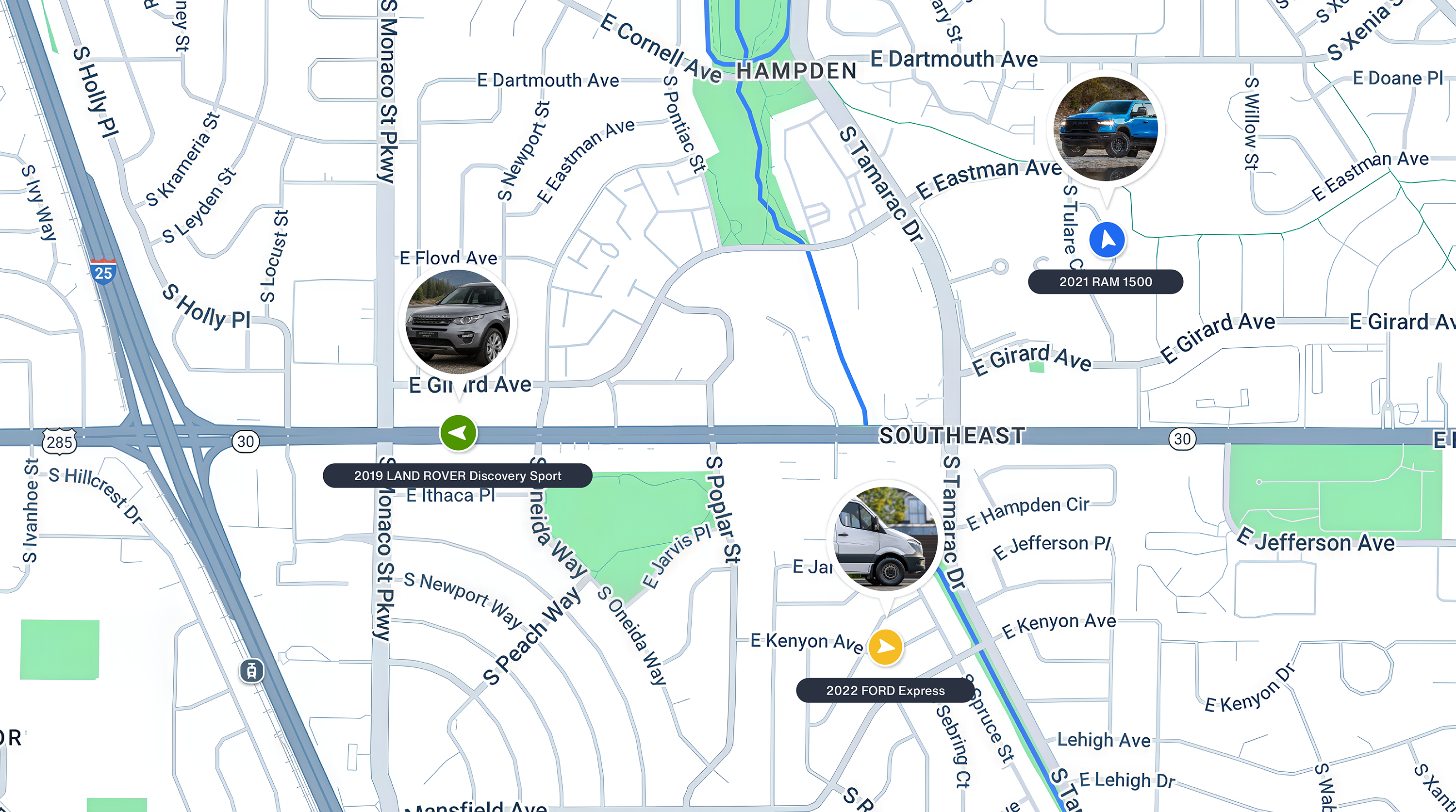
For example, when a vehicle trip is completed, its location and mileage are updated. When a diagnostic issue is detected, that real-time information feeds immediately into Fleetio. When a condition resolves, the system reflects that update automatically.
This is a native integration between Bouncie and Fleetio, meaning it is designed to work seamlessly within both platforms. For fleets already using one or both systems, there is no additional cost to enable the connection. The goal is to enhance what is already in place, not add complexity.
What Data Syncs Between Bouncie and Fleetio
The Bouncie and Fleetio integration syncs core telematics data, including location, odometer readings, and diagnostic trouble codes, into Fleetio.
GPS Location
Bouncie provides location data for each connected vehicle. Through the integration, this data is translated into location entries within Fleetio.
Each entry includes the date, latitude, and longitude of the vehicle. This gives fleet managers and operations teams a clearer picture of where vehicles are and how they are being used, all within the same system they use for maintenance.
Odometer Readings
Accurate mileage tracking is essential for scheduling preventative maintenance. Bouncie captures odometer readings, which are then sent to Fleetio as meter entries.
These entries include both the value and the date, ensuring that maintenance schedules are based on current, reliable data. This eliminates the need for manual updates and reduces the risk of missed service intervals.
Battery Voltage Alerts
When Bouncie detects low battery voltage, that event is automatically turned into an issue within Fleetio. The issue is labeled as a battery alert and includes the vehicle ID and the date it was reported. Instead of a passive alert, this becomes an actionable item that maintenance teams can track and resolve.
Diagnostic Trouble Codes (DTCs)
Diagnostic trouble codes are one of the most valuable data points for proactive maintenance. Through the integration, Bouncie sends qualified DTC events to Fleetio.
Fleetio then creates fault rules if they do not already exist, logs faults when issues occur, and automatically resolves them when the issue clears. This creates a full lifecycle for diagnostic issues, from detection to resolution, without requiring manual intervention.
How This Changes Daily Fleet Operations
The practical impact of the Bouncie and Fleetio integration is most visible in how it changes the daily routines of fleet managers and maintenance teams.
Before integration, a fleet manager might start the day by checking multiple systems, reviewing telematics alerts, updating mileage records, and logging into a maintenance platform to create or adjust service tasks. Each step requires time and attention. Each step introduces the possibility of delay or oversight.
With the Bouncie and Fleetio integration in place, much of that work happens automatically.
- As vehicles are driven, odometer readings update in Fleetio without manual input.
- Maintenance schedules adjust based on real usage rather than estimated or outdated data.
- Diagnostic issues appear as structured faults that can be tracked and resolved within existing workflows.
Teams can focus on interpreting that data and taking action instead of spending time moving data between systems.
Consider a scenario where a vehicle begins to show signs of a mechanical issue. A diagnostic trouble code is triggered and sent through Bouncie. That information is immediately reflected in Fleetio as a fault. A maintenance team can see the issue, assess its severity, and schedule service without delay. If the issue resolves on its own, the system updates accordingly. There is no need to manually close out tasks or reconcile records.
The takeaway is straightforward. When vehicle data flows automatically into maintenance workflows, teams spend less time managing information and more time acting on it.
Where Fleets See the Most Value
The Bouncie and Fleetio integration improves visibility and reduces manual work, but its strongest value shows up in four specific operational outcomes.
Reduction in Administrative Work
Manual data entry, cross-checking systems, and updating records all take time. By automating these processes, fleets can operate more efficiently without increasing workload.
Accurate Maintenance Scheduling
With real-time odometer data and immediate visibility into diagnostic issues, service decisions are based on what is actually happening with each vehicle. This helps prevent both missed maintenance and unnecessary service.
Faster Issue Response
When alerts are automatically turned into actionable items, teams can address problems sooner. This reduces the likelihood of small issues becoming larger, more expensive repairs.
Accountability at All Levels
When data is consistently captured and reflected across systems, it becomes easier to track vehicle performance, maintenance history, and response times. This level of visibility supports better decision-making at every level of the organization.
Why Bouncie Is a Strong Fit for Fleetio Users
For fleets using Fleetio, having a reliable source of real-time vehicle data is essential, and that is exactly where Bouncie fits in.
Bouncie provides continuous GPS tracking, driving data, and diagnostic insights through a simple plug-in device. Installation is straightforward, requiring no complex setup or downtime. Once connected, it begins capturing and transmitting data immediately.
This makes Bouncie a practical telematics layer for fleets that want to strengthen their maintenance and operations without adding unnecessary complexity.
The integration with Fleetio builds on that foundation. Because it is a native connection, the data flows cleanly between systems without requiring custom configurations or third-party tools.
This is not a workaround or a third-party connector. Bouncie went through Fleetio's formal vetting and approval process to become a listed integration in their directory. That means the connection meets Fleetio's own standards for reliability, security, and data integrity. For fleet managers evaluating whether this integration is enterprise-ready, that distinction matters.
This integration is particularly well suited for small to mid-size fleets managing service vehicles, delivery operations, or field teams. These fleets often lack dedicated IT resources to build custom data connections, which makes a native, no-cost integration like this one especially practical. If your team is already using Fleetio to manage maintenance and looking for a reliable telematics source, Bouncie is built to fit that workflow without adding complexity.
For organizations already using Fleetio, Bouncie is a direct and practical way to bring real-time vehicle data into existing maintenance workflows. For teams evaluating both platforms together, the integration means fleet operations and maintenance management can be handled in a more connected, unified system from day one.
Frequently Asked Questions
Is Bouncie compatible with Fleetio?
Yes. Bouncie offers a native integration with Fleetio that connects real-time GPS, odometer, battery, and diagnostic data directly to your maintenance workflows. No third-party tools or custom configuration are required.
How often is data updated in Fleetio?
GPS location and odometer data are updated in near real time as Bouncie devices report new information. Other data, such as faults and battery alerts, are created when triggered by vehicle activity.
What vehicle data is synced between Bouncie and Fleetio?
Bouncie syncs GPS location, odometer readings, battery voltage alerts, and diagnostic trouble codes.
How are low battery alerts handled?
When a low battery voltage is detected, Bouncie creates an issue in Fleetio and applies a label to identify it as a battery-related alert.
How are diagnostic trouble codes managed?
Bouncie creates fault rules in Fleetio if they do not already exist, then logs faults when issues occur. Faults are automatically updated to resolved when the issue is cleared.
What do I need to connect Bouncie to Fleetio?
You need two credentials from your Fleetio account, an API Token and an Account Token, to securely authorize and sync the connection. For step-by-step setup instructions, visit Bouncie's Fleetio integration page.
The Business Value of Connecting Bouncie and Fleetio
Fleet operations depend on timely, accurate information, and that only happens when the systems holding that information are connected. When telematics and maintenance platforms operate separately, even well-run teams are working with an incomplete picture.
The Bouncie and Fleetio integration addresses this challenge by connecting real-time vehicle data with maintenance workflows. It removes the need for manual updates, improves visibility, and allows teams to respond more quickly to what is happening across their fleet.
For fleets using both platforms, the integration offers a way to get more value from the tools they already rely on. It simplifies day-to-day operations while supporting better maintenance decisions.
As fleets look for ways to operate more efficiently and proactively, the Bouncie and Fleetio integration is a practical next step. To learn more about how Bouncie supports fleet operations, visit bouncie.com.